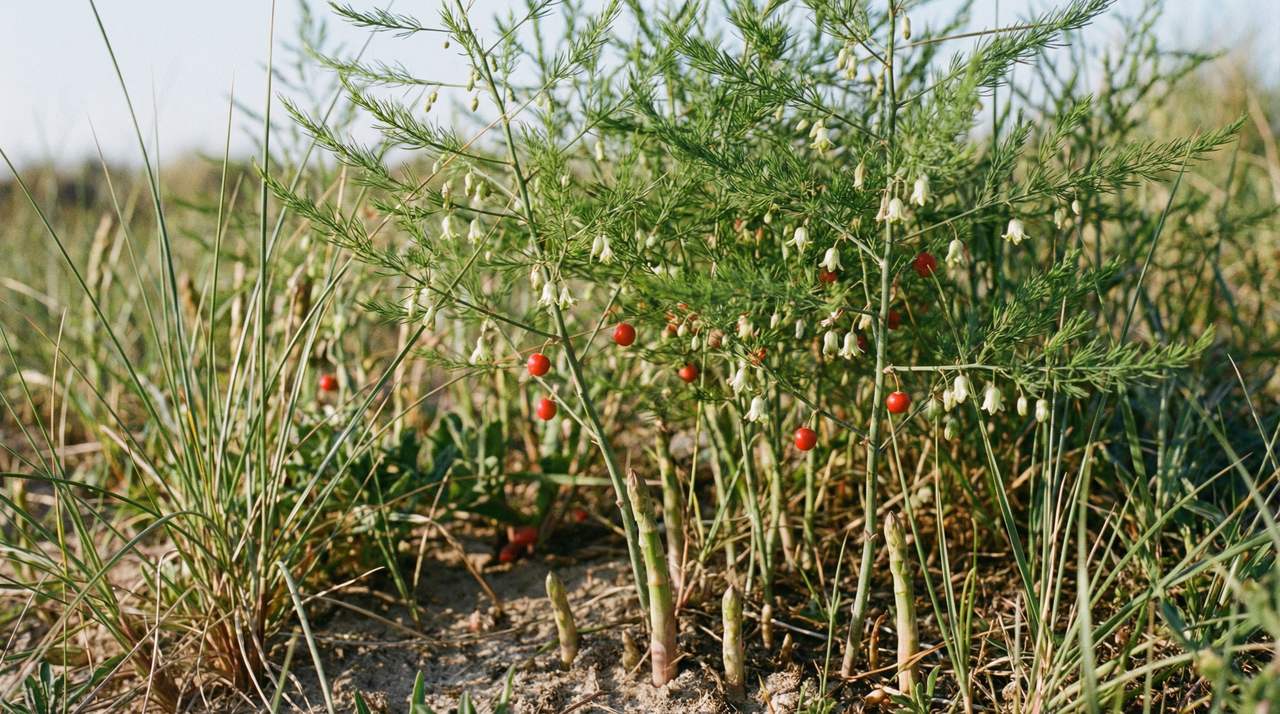
Nobody believes me when I tell them asparagus is one of the most patient plants in the vegetable garden, not because it grows slowly (though it does), but because it will simply outlive you if you let it. A well-sited bed can produce for 30 years or more.[1] I've visited old homestead properties where the house is gone, the orchard is scraggly and half-wild, and there in the corner, flush and green every April without anyone lifting a finger, is a massive asparagus bed that's been feeding whoever showed up for decades. That detail stopped me cold the first time I saw it, and honestly it changed how I think about perennial food systems.
Here's what trips people up: they treat asparagus like a slow annual, something to endure for a season or two before giving up. The plant is actually asking you to think in decades, not growing seasons. Those first two or three years of restraint, when you're watching spears emerge and deliberately leaving them alone, aren't failure. They're infrastructure. And once you stop fighting that timeline and start working with it, asparagus stops being the high-maintenance vegetable everyone warns you about and starts being exactly the kind of low-effort, long-horizon crop that a resilient garden is built around.
The Origins and History of Asparagus
From Wild Shorelines to Ancient Tables
Long before anyone was planting asparagus crowns in raised beds, Asparagus officinalis was already doing its thing along the sandy coasts, riverbanks, and salt marshes of the eastern Mediterranean, western Asia, and parts of Europe. Those wild populations still exist today, and if you've ever seen them, you'd notice right away how scraggly the spears are compared to what we harvest in the garden. The thick, fleshy, succulent spear we prize is the result of thousands of years of human selection pressure, a gradual coaxing of something thin and fibrous into something worth eating by the fistful.
The genus Asparagus is far larger than most gardeners realize. There are roughly 300 species in the group, and the vast majority of them have nothing to do with your dinner plate. You've almost certainly grown some of them without knowing it: Asparagus densiflorus, the familiar foxtail fern, and Asparagus setaceus, the wispy "asparagus fern" that shows up in flower arrangements and houseplant collections, are close relatives. I've noticed over the years that once the harvest season ends and garden asparagus sends up its feathery fronds, it gets that same delicate, almost ornamental quality you see across the genus. Clients who've never grown it are often surprised by how pretty the summer foliage actually is.
Traditional and Cultural Significance Through the Ages
Asparagus has a paper trail going back at least to ancient Egypt, where it appeared in tomb carvings, and the Greeks were writing about its diuretic properties well before the Romans took it up with characteristic enthusiasm. Roman cooks apparently dried spears for off-season use, which tells you something about how much they valued it. The word itself comes from the Greek asparagos, and it's one of the few vegetables whose name has essentially survived intact across two millennia of language drift.
Through medieval Europe it appeared in monastery gardens, treated as both a spring vegetable and a medicinal herb with tonic properties. Various cultures tagged it as an aphrodisiac at one point or another, though that reputation seems to have been more wishful than botanical. The real reason it kept showing up on elite tables was simpler: it arrives in early spring when almost nothing else is producing, and it tastes good.
I tell every client who asks about asparagus that they're not just planting a vegetable, they're planting a twenty-year landscape commitment. That framing resonates more than people expect, partly because it's true and partly because it connects them to something that royal gardeners and cottage farmers have understood since antiquity. The crowns you put in the ground this year could still be feeding someone long after you've moved on to other projects. There's something genuinely grounding about that, and the historical record backs it up completely.
Choosing Asparagus Varieties for Your Garden
The variety decision you make before planting will shape your asparagus patch for the next two decades, so it's worth thinking through carefully. The field has essentially split into two camps: modern all-male hybrids and traditional open-pollinated varieties like Mary Washington. Both have real merits, and I've grown both long enough to have opinions about each.
All-Male Hybrids vs Traditional Varieties
All-male hybrids like Jersey Giant, Jersey Knight, and Jersey Supreme have taken over commercial and home production for a good reason: male plants put no energy into seed production, which translates directly into heavier, more consistent spear yields. After trialing several cultivars over the years, I now default to all-male hybrids for any new bed I install. In my zone 9B summers, that productivity edge becomes obvious by the third year, and I don't miss weeding out the weedy asparagus seedlings I used to battle constantly with mixed-sex plantings.
That said, I haven't abandoned Mary Washington entirely. It's an open-pollinated variety with both male and female plants, good flavor, and solid rust resistance, which matters enormously if you want a bed that stays productive across a 15-plus year lifespan. Just as I select disease-resistant blueberry cultivars before planting a guild, I prioritize rust resistance in asparagus so the planting doesn't slowly decline by year seven or eight. Mary Washington delivers that, even if it requires a bit more management to keep self-seeding in check. For purple asparagus, Asparagus officinalis 'Purple Passion' is worth seeking out for its sweeter, more tender spears, though it tends toward lower yields than the Jersey series.
Sourcing Healthy Asparagus Crowns or Seed
Once you've chosen a variety, where you get your plants matters just as much as which one you pick. Buy one-year-old crowns from a reputable nursery, full stop. I've watched clients bring home bargain-bin two-year crowns that sulked for an entire season before doing anything useful, and I've made that same mistake myself early on. Fresh one-year crowns establish faster, suffer less transplant shock, and ultimately outpace older stock within a couple of seasons. When you're inspecting crowns before purchase, look for plump, firm buds and healthy-looking roots; avoid anything dried out or showing soft spots.
Asparagus can be started from seed, and I've done it for custom crosses, but it adds two to three years before you see a harvestable spear. For most home growers, and for nearly every client putting together a food forest, crowns are the practical choice. A new perennial guild has enough variables in the first few years without also waiting on seed-grown asparagus to catch up.
Asparagus Propagation and Planting Guide
Asparagus is one of those perennials where the decisions you make at planting time echo for the next two decades. Get it right, and you'll be walking out to the same bed every spring for spears without doing much more than mulching and waiting. Get it wrong, and you're digging out a waterlogged mess two years in. So it's worth thinking carefully before you put anything in the ground.
Choosing Between Crowns and Seed for Asparagus
There are two ways to start an asparagus bed: buy one-year-old crowns from a nursery, or grow plants from seed. I've used both, but in my landscape designs I almost always recommend crowns because they shave a full year off an already long establishment timeline. Look for crowns with at least three to five healthy buds and plump, firm roots. If the roots look shriveled or there's any mold at the crown, walk away. That's one of those purchasing details no one tells you until you've already brought home a bag of duds.
Seed starting is slower but genuinely worth considering if you want to trial specific varieties or keep costs down for a large bed. Start seeds indoors eight to twelve weeks before last frost, or direct sow once soil temps reach around 70°F. Germination takes anywhere from two to three weeks. One thing I've noticed is that seed-grown plants can develop exceptionally strong root systems over time, sometimes outperforming crowns once they hit their stride. The trade-off is patience, and patience is the one resource asparagus demands in abundance.
Whichever route you take, I'd steer you toward all-male hybrid varieties. Female plants put energy into seed production, and I've watched them seed prolifically into a bed over the years, creating a weedy tangle that's genuinely frustrating to manage.
Soil, Site Selection, Spacing, and Planting Techniques
Asparagus needs full sun, at least six to eight hours daily, and it absolutely cannot sit in wet soil. The crowns will rot in heavy clay or anywhere drainage is sluggish. Before I plant an asparagus bed, I amend generously with compost and make sure water moves through freely. The soil prep here reminds me of what I do before establishing rhubarb or globe artichokes: it's a one-time investment that pays back for years, so it deserves genuine effort.
Dig trenches eight to twelve inches deep, with rows spaced four to six feet apart. Within each row, place crowns or seedlings twelve to eighteen inches apart. For crowns, spread the roots out flat in the trench and cover with just a couple of inches of soil at first, then gradually fill in as the shoots emerge. For seeds, plant half an inch to one inch deep. A good layer of mulch over the bed from the start suppresses the weeds that will absolutely try to move in during those early ferns-only years. Target a soil pH between 6.5 and 7.5 and you'll cover the conditions this plant genuinely prefers.
What to Expect in the First Year
The first year, asparagus will send up thin, wispy spears that should be left completely alone to fern out. I know how hard that is. I harvested from my first bed way too early, taking spears in year two when I thought the plants looked established enough. They weren't. The root system weakened, the bed never performed the way it should have, and I spent years nursing it back. Now I tell every client the same thing: wait until year three for even a modest harvest. That restraint is what allows the crown to build the deep carbohydrate reserves it needs to sustain twenty years of production.
Keep the bed consistently moist during establishment, especially if you've started from seed. Asparagus rewards that initial attention with very little ask afterward. Once it's settled in, you've built something that most of your other vegetables can only dream of being.
Asparagus Care and Growing Guide
Everything about caring for asparagus comes back to one fundamental truth: you're not tending an annual crop, you're building infrastructure. A well-sited bed can feed you for 20 years or more, which means every decision in the first few seasons carries unusual weight. I've seen too many enthusiastic gardeners rush the process, harvest too aggressively in year two, and end up with a weak, declining bed within five years. The long view isn't optional with this plant.
Water and Sunlight Needs for Healthy Spears
Full sun is where asparagus really performs. Six or more hours is the minimum I'd accept, though in climates with brutal afternoon heat, a little dappled shade after midday can actually help spears stay tender rather than bolting to open fern too quickly. The plant can tolerate some light shade, but yields drop noticeably and crown vigor suffers over time.
Consistent moisture matters most during the first two years when crowns are putting energy into root mass rather than spears. I aim for about an inch to an inch and a half of water per week, delivered deeply enough to reach those roots. What I've learned to avoid is soggy soil: asparagus crowns are remarkably rot-prone in waterlogged conditions, and a poorly drained bed can lose crowns you've been waiting years to harvest from. Heavy mulching with straw or autumn leaves does double duty here, holding moisture while keeping weeds out of a bed that doesn't want to be disturbed.
Feeding, Frost, and Heat Management
Asparagus responds well to a top-dressing of compost each spring before spears emerge, plus a balanced organic fertilizer applied again in midsummer once you've stopped harvesting and the ferns are in full growth. That midsummer feeding is one people often skip, but it's when the crown is doing its most important work, storing energy for next year's spears.
Established crowns are genuinely cold-hardy, often surviving hard freezes without any help. Emerging spears in early spring are more vulnerable: a light frost usually just tips them but a hard late freeze can damage a whole flush. Row cover over newly emerged spears on cold nights is cheap insurance. On the heat end, asparagus goes dormant in intense summer conditions, and I've come to see that as a feature rather than a failure. More tender perennials in my garden struggle through brutal heat; asparagus simply retreats and waits.
Pruning, Maintenance, and Seasonal Rhythm
The asparagus year has three distinct phases and treating each one correctly is what separates productive beds from struggling ones. During the harvest window, you cut spears as they emerge. Once spears start coming up thinner than a pencil, you stop cutting and let everything go to fern. That fern phase is critical: the tall, feathery growth is how the crown banks energy for the following spring, and cutting it back too early is the single most common mistake I see new growers make. I let the ferns grow as tall as they want, which can hit four to five feet in a good season, and honestly they make a beautiful soft screen along a bed edge.
When frosts finally brown the ferns in late fall or early winter, that's when I cut them back to a few inches above ground and lay a generous mulch over the bed. Waiting for natural die-back rather than cutting in early autumn makes a real difference in root reserves. Crowns don't need dividing often, but every five to seven years an overcrowded bed benefits from careful separation to restore vigor. The discipline to hold back from harvesting in years one and two is genuinely hard, but the beds that get that patience become the ones people point to with pride for decades.
How and When to Harvest Asparagus
Timing and Visual Cues for Peak Flavor
Every new asparagus grower has to make peace with one hard truth: you're not harvesting anything for at least two years, and honestly, three is better. Those first seasons are entirely about building the crown — a sprawling underground storage system that will feed your kitchen for decades if you let it develop properly.[1][2] I pushed light harvesting too early on my first planting and spent the following spring watching noticeably thinner spears emerge. Patience here is not abstract advice; it's cause and effect.
Once your bed is ready, harvest spears at 6 to 10 inches tall, before the tips start to loosen and fern.[3][1] In warm spring weather spears can push two inches in a single day, so I check my beds every day or two during peak season.[2] I also mark my row ends with perennial companions so I never accidentally step on emerging spears when the bed still looks bare in early spring. It sounds minor until you crunch one underfoot.
Proper Cutting Technique to Protect the Crown
You can cut spears at or just below the soil line with a sharp knife, but I've come to prefer snapping by hand. When a spear is ready, it breaks cleanly right where the tender meets the tough, and you avoid any risk of nicking an emerging crown that hasn't broken the surface yet.[1][4] Either way, don't pull. Yanking a spear can disturb the crown and the crowns around it. With a plant you're planning to harvest for 20-plus years, there's no reason to be rough.
Expected Yield, Storage, and Flavor Notes
A mature crown produces roughly half a pound to two pounds of spears per season, or around 10 to 20 pounds per 100 square feet.[1][3] In my experience, a family of four needs 20 to 30 crowns to eat asparagus regularly through spring rather than just occasionally. Plan for more than you think you need.
Asparagus sugars convert to starch quickly after cutting, so the flavor difference between a spear picked this morning and one that's been in the fridge three days is genuinely dramatic. Eat it fast. The harvest window itself runs 4 to 8 weeks depending on your climate, and you'll know it's closing when spears start coming up thinner and pencil-sized.[1][2] Stop cutting at that point and let those spears fern out. They're feeding the roots now, setting up next year's harvest. Think of it the way you'd treat rhubarb: harvest, then step back and let the plant recharge.
Asparagus Preparation and Culinary Uses
Culinary Uses of Asparagus
There's a moment every spring that I genuinely look forward to: the first spear of the season snapping cleanly in my hands. That audible crack tells me everything I need to know about freshness, and it's the reason I always encourage gardeners to cook asparagus as close to harvest as possible. Once it sits in the fridge for a few days, the sugars convert and that bright, mineral sweetness starts to fade. My trick for extending the window is storing spears upright in a jar with about an inch of water, loosely covered with a plastic bag, which buys me an extra three or four days without sacrificing much quality.
The best asparagus recipes don't fight the vegetable. Roasting at high heat is my go-to method: toss spears with olive oil and salt, spread them on a sheet pan, and run them in a 425°F oven for 10 to 12 minutes. The tips get slightly caramelized while the stalks stay crisp-tender, closer in texture to properly cooked green beans than anything mushy. That's the target. Overcooking asparagus in the oven turns it limp and sulfurous, which is where a lot of people get a bad first impression. For an asparagus oven recipe that pairs naturally with other spring harvests, I'll lay the roasted spears over a soft scrambled egg from the backyard chickens, scattered with whatever early herbs are ready: chervil, chives, a little lemon thyme.
Don't throw away the woody ends. They're too fibrous to eat but they make a respectable stock base, especially simmered with onion skins and a bay leaf from the food forest. It's small-scale but satisfying, exactly the kind of whole-use thinking that fits a permaculture kitchen.
Traditional Medicinal Preparations
Folk traditions across Europe and the Middle East have long used asparagus root preparations, mostly simple decoctions, as a mild diuretic or to support urinary health. I'll admit I've made root tea from my own plants out of curiosity once or twice. The flavor is earthy and subtle, and while I find the historical tradition interesting, I want to be honest that the modern clinical evidence behind these preparations is pretty thin. The health benefits covered elsewhere in this article are largely tied to eating the vegetable itself, not concentrated root extracts.
If you've eaten asparagus and noticed a distinctive smell in your urine afterward, I've grown and eaten asparagus for years and this effect is common but completely benign. It's a byproduct of how your body breaks down certain sulfur-containing compounds in the spears. Some people produce the odor, some don't, and some people can smell it while others can't. No cause for concern. It's just asparagus doing what asparagus does.
Asparagus Health Benefits and Medicinal Uses
Asparagus has carried a reputation as a health-supporting plant for centuries, and not just because it tastes good in spring. Long before it was a restaurant staple, healers in both Ayurvedic tradition and European herbalism reached for it when they wanted to support kidney function and digestion. The modern picture is more nuanced than ancient reputation suggests, but the nutritional case for growing and eating your own is genuinely solid.
Nutritional Profile of Asparagus
What I find underappreciated about asparagus is how much it delivers for such a low caloric load. A standard serving sits around 20 calories while offering meaningful amounts of folate, vitamin K, and vitamins A, C, and E. Folate stands out in particular, important for cell repair and especially relevant during pregnancy, and asparagus provides more of it per serving than most garden vegetables outside of legumes. Vitamin K levels rival those of spinach or broccoli, which matters for bone health and proper clotting function.
After years of growing asparagus in my Central Florida beds, I've noticed that spears harvested from well-drained soil with good organic matter are noticeably more tender and flavorful than anything from a grocery store. That's not just about taste. Nutrient levels in vegetables degrade quickly after harvest, so the asparagus you cut and carry to your kitchen within the hour is nutritionally different from what sat in a cold chain for two weeks. Home growers get the best version of this plant's nutrition almost by default.
Phytochemicals and Potential Therapeutic Effects
The compounds that give asparagus its traditional medicinal reputation are mostly saponins and flavonoids, specifically quercetin and rutin. These phytochemicals have been studied for potential anti-inflammatory and diuretic effects, and while the clinical evidence is still preliminary rather than conclusive, the historical pattern of use is consistent enough to take seriously. Ayurvedic practitioners used Asparagus racemosus (a related species) for urinary and digestive support for thousands of years, and European herbalists leaned on A. officinalis in similar ways. There's something telling about that cross-cultural convergence even when the randomized trial data is thin. A 2020 study in the Journal of Agricultural and Food Chemistry noted a possible benefit for blood sugar regulation and blood pressure, but I'd frame those as directions worth watching rather than settled conclusions.
Safety Considerations and Traditional Uses
The most common "side effect" of eating asparagus is perfectly harmless and actually kind of fascinating once you understand it. That distinctive urine odor some people notice comes from sulfur-containing metabolites, particularly asparagusic acid and its breakdown products. I've grown so used to it that I consider it a quiet signal from my body that it's processing something real. About half of people can actually detect the smell due to genetic variation in olfactory receptors, so if you've never noticed it, that says something about your genes rather than the plant.
For most people, asparagus as a food is genuinely safe and well-tolerated. Those with a history of uric acid kidney stones should be aware that asparagus contains purines, which can elevate uric acid levels, so moderate intake makes sense in that context. Rare allergic reactions exist, primarily in people also sensitive to other members of the Asparagaceae family. The broader point is that the strongest argument for asparagus as a health-supporting plant is simply eating it regularly and fresh, as part of a varied diet, rather than seeking out concentrated extracts or expecting therapeutic outcomes that the current research doesn't fully support.
Common Pests and Diseases of Asparagus
A well-designed asparagus bed, planted with good companions and built on healthy soil, is honestly its own best defense. I've watched the same bed that struggled with beetle pressure one year settle into near-equilibrium the next, once the surrounding guild filled in and the beneficial insect population caught up. That's not wishful thinking; it's just how a balanced ecosystem works. The problems below are real, but none of them should scare you off this crop.
Asparagus Beetles and Other Insect Pests
The two insects you'll actually lose sleep over are the common asparagus beetle (Crioceris asparagi) and the spotted asparagus beetle (Crioceris duodecimpunctata).[2] Adults are small, only about a quarter inch long, blue-black with cream-colored spots; the larvae are grayish with black heads and chew through both spears and ferns.[5] I remember the first spring I grew asparagus and found tiny orange eggs lined up on my spear tips like miniature fence posts. Once you've seen them, you'll spot them instantly every year after, and catching eggs before they hatch is the most effective management step there is.
My approach has always been to handpick, encourage lady beetles and parasitic wasps, and reach for neem oil only when pressure is genuinely heavy.[6] I've never felt the need for anything stronger. Aphids, cutworms, and slugs do show up occasionally, but in a bed with good soil biology and some polyculture around it, they rarely amount to much.[7]
Fungal Diseases Including Rust and Crown Rot
Asparagus rust (Puccinia asparagi) shows up as orange-red pustules on the ferns, and left unchecked it drains the plant's energy season after season, steadily reducing yields.[8] If you've dealt with bean rust or hollyhock rust in other beds, you already know what you're looking at; the spore pustules have that same dusty, burnt-orange look. In my experience, good airflow through proper spacing does more to prevent rust than anything else. Crown and root rot, usually traced to Fusarium species, causes stunted growth, yellowing, and gradual plant decline, and it's almost always associated with poorly drained soil.[9]
Prevention covers most of the ground here: choose disease-resistant varieties, ensure drainage is genuinely good before you ever plant, pull and dispose of infected debris rather than composting it, and keep overhead irrigation off the ferns whenever possible.[10] Get the site preparation right and serious disease pressure becomes uncommon. These aren't reasons to hesitate; they're just things to stay aware of as your bed matures.
Asparagus in Permaculture Design
There's a reason asparagus keeps showing up in food forest designs alongside plants that live for decades. It thinks like a perennial. It roots deep, stabilizes its corner of the garden, and once it's established, it asks very little while giving a lot back. In a permaculture system where we're always thinking about stacking functions across time, that kind of long-horizon reliability matters.
Ecosystem Functions and Soil Benefits
What I've noticed in every asparagus bed I've managed past year three is that the soil underneath changes. The roots go down far enough that they're pulling up minerals from layers most vegetable crops never touch, and as the fern canopy fills in each summer, you get a self-generated mulch that suppresses weeds without any intervention from me. By year four in one of my older guild plantings, I had essentially stopped weeding that section entirely. The ferns were doing it for me.
That dense summer canopy also creates a stable microhabitat for ground beetles, spiders, and other beneficial insects that overwinter in the litter layer and come back season after season. Pair asparagus with a nitrogen-fixer like white clover or a sprawling bean at the bed edges, and you're actively building soil fertility rather than just maintaining it. The deep roots and the surface biology work different layers, so they complement rather than compete.
Forest Layer and Guild Companions
In food forest terms, asparagus fits the tall herbaceous layer, which puts it between ground covers and shrubby perennials in a stacked system. It doesn't shade aggressively, so lower companions can thrive alongside it without getting smothered. My go-to guild usually includes:
- Strawberries tucked at the bed edges
- Comfrey positioned nearby for chop-and-drop mulching
- Rhubarb at the far end
I also like planting asparagus near tomatoes when bed space allows. The relationship seems to be mutually beneficial in my observation, with the asparagus deterring some soil pests while the tomatoes repel asparagus beetles. It's the kind of low-input asparagus companion planting that doesn't require you to remember to do anything extra. You just design the bed once and let the system run.
Suitable Climates and Growing Zones
Asparagus is most at home in USDA zones 3 through 8, where cold winters give the crowns the dormancy period they need to reset. You can push it into zone 9 with some adjustments, which is exactly what I do here in Central Florida. The key is drainage. I cannot overstate this. I had one bed fail completely in a low spot where water pooled after heavy rain, and I've had real success once I moved to raised beds with amended, gritty soil that sheds moisture quickly.
In warmer climates, I also time plantings for the cooler months, getting crowns into the ground between November and February when soil temperatures are more forgiving. During our brutal summer fern stage, I position beds where they'll catch some afternoon shade from a taller shrub or young fruit tree. That shade slows crown stress without cutting into spring spear production. It's the kind of site-specific thinking that separates a bed that limps along from one that's still productive fifteen years later. Asparagus rewards that patience. You put the work into placement upfront, and the plant does the rest for a very long time.
The Plant That Taught Me to Think in Decades
I put in my first asparagus crowns before I really understood what a perennial commitment meant, and that bed is still producing. There's something clarifying about tending a plant that will almost certainly outlast your enthusiasm for any particular gardening trend. Every spring when the first spears push up, I'm reminded that the best things in a food forest aren't planned for next season; they're planted for someone you'll be ten years from now.
Sources 10
- Growing Asparagus | University of Minnesota Extension ↩
- Asparagus Production | Penn State Extension ↩
- Asparagus | Diseases and Pests, Description, Uses, Propagation ↩
- Harvesting and storing home garden vegetables | UGA Extension ↩
- Asparagus Beetles ↩
- Managing Asparagus Beetles in the Home Garden ↩
- Insect Pests of Asparagus ↩
- Asparagus Rust ↩
- Asparagus Diseases ↩
- Growing Asparagus in a Home Garden ↩
About the Author
Victoria is a landscape designer and owner of Rainshadow Permaculture Design. Inspired by the old-growth forests of Washington, she specializes in residential, homestead, and small-scale farm regenerative designs.