
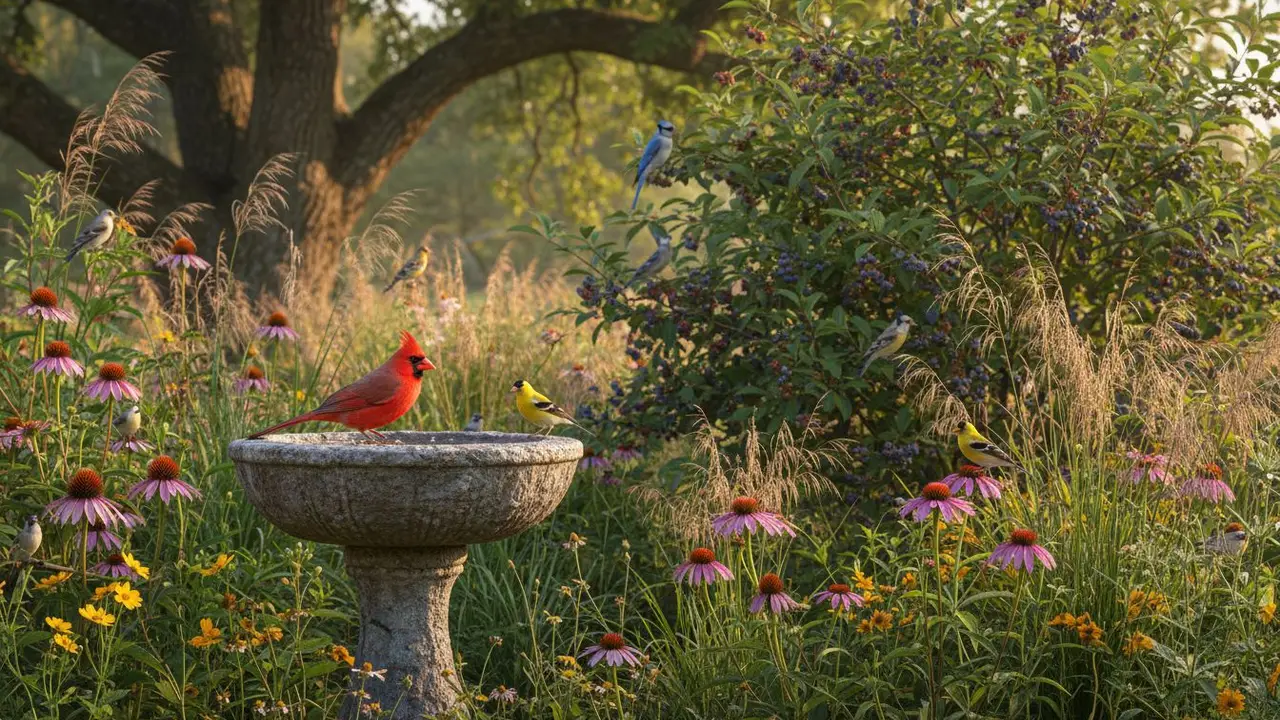
There are few greater pleasures in a garden than the company of birds: the flash of a cardinal in the shrubs, the busy chatter of chickadees, a hummingbird hovering at the flowers. Creating a bird-friendly garden is one of the most rewarding things you can do with a patch of ground, and it is not only for the delight of it. Birds are voracious eaters of garden pests and a sign of a healthy, living ecosystem, so a yard full of birds is a yard that largely takes care of its own pest problems. The recipe is simple: give birds the four things they need, food, water, shelter, and safe places to nest, and take away the hazards that harm them. Do that, and your garden will fill with song. This guide walks through each piece.
Food: Plants First, Feeders Second
The single biggest thing you can do to feed birds is to grow a living, plant-rich garden, because a well-planted yard is a far greater buffet than any feeder. Birds get their food from your plants in several ways.
- Insects. This is the most important and most overlooked. The great majority of birds, and nearly all nestlings, are fed on insects, especially caterpillars, which is why a garden of native plants that grow those insects is the foundation of any bird habitat. It also means you must not spray, since insecticides erase the very food birds depend on; lean on organic pest control instead.
- Seeds. Leave the seed heads standing rather than deadheading everything, and plants like sunflowers, coneflowers, asters, goldenrod, and native grasses become a natural larder that feeds finches and sparrows straight through winter. The first fall I left my coneflower and sunflower heads standing instead of cutting them down, a flock of goldfinches worked them over for weeks, and I have never deadheaded so eagerly again.
- Berries and fruit. A shrub or tree hung with fruit is a bird magnet, so plant serviceberry, elderberry, dogwood, holly, and blackberry, several of which, as I cover in my guide to growing berries, feed you as well. The serviceberry I planted became the busiest corner of the whole garden the week its fruit ripened, stripped clean by cedar waxwings and robins in a matter of days.
- Nectar. For hummingbirds, plant tubular red and orange native flowers, and hang a clean sugar-water feeder to supplement.
Feeders are a fine supplement, especially in winter, and black-oil sunflower seed, nyjer, and suet all draw a crowd, but keep them scrupulously clean to avoid spreading disease, and site them either right beside protective cover or well out in the open, since a feeder a short flight from a dense shrub gives small birds a fast escape from hawks and cats. As the Audubon Society emphasizes, the plants do the real work; a feeder is the garnish, not the meal.
Water
A reliable source of clean water may attract more birds than anything else, for both drinking and bathing, and in every season. A simple bird bath does the job: shallow, no more than an inch or two deep, with a rough surface or a few pebbles for grip. The real secret is moving water, because the sound and sparkle of a dripper, mister, or small fountain draws birds from a remarkable distance. In cold climates, an unfrozen source in winter is a powerful draw. Place the bath near cover but with clear sightlines so birds can watch for predators, and clean and refill it regularly. When I first set out a simple bath, birds found it within days and the whole garden seemed to come alive around it.
Shelter and Cover
Birds need places to escape predators and bad weather, to roost, and to forage in safety, and a bare, over-manicured lawn offers none of that. The answer is layers of vegetation: tall trees, a middle story of shrubs and small trees, and a ground layer of perennials and grasses together create a wealth of niches for different birds. Dense shrubs and evergreens give year-round cover, a hedgerow makes a highway of habitat, and even a humble brush pile in a corner, or a standing dead branch left as a perch, offers shelter and foraging. This is exactly the kind of layered, native planting that also feeds birds, so the same structure does double duty.
Nesting Sites
To keep birds, not just visit them, your garden needs places to raise young. Trees, dense shrubs, and wild, undisturbed corners provide natural nest sites, so leave a few areas a little untamed. For cavity nesters like bluebirds, chickadees, and wrens, a well-made nest box fills a gap that modern tidy landscapes lack, provided you match the box and entrance-hole size to the species you hope to attract, mount it correctly with a predator guard, and clean it out each year. You can offer nesting materials, too, simply by leaving twigs, leaf litter, dead grasses, and the fluff of spent plants around the garden rather than clearing away every last scrap of it in the name of tidiness.
Remove the Hazards
A truly bird-friendly garden is defined as much by the dangers you remove as by the habitat you add, and a few hazards do enormous harm.
- Window collisions. Reflective glass kills a staggering number of birds every year. Break up the reflections that fool them with decals, screens, external netting, or patterns of dots spaced across the glass, especially on large windows that mirror the garden. A window beside my desk kept claiming the occasional bird until I applied a pattern of decals across it, and the strikes simply stopped.
- Free-roaming cats. Outdoor cats are the single largest human-caused killer of birds, so the most powerful thing many gardeners can do is simply keep their cats indoors or in an enclosed "catio."
- Pesticides. Insecticides strip away the insect food birds need and can poison the birds directly, and rodenticides move up the food chain into hawks and owls, so a bird-friendly garden is a chemical-free one.
- Over-tidiness. Raking the garden bare and cutting everything down in fall removes the seeds, shelter, and overwintering insects birds rely on. Leave the leaves and the seed heads through winter.
A Bird-Friendly Garden Through the Seasons
Birds need different things at different times of year, and a good habitat garden supplies them all. In spring and summer, the priority is insects, above all the caterpillars that feed nestlings, so native plants and a no-spray garden do the heavy lifting; this is also nesting season, when cover and nest boxes matter most. In fall, migrating and resident birds fuel up on berries and the first ripe seeds, so this is when your fruiting shrubs and standing seed heads earn their keep. And in winter, when natural food is scarcest, the seed heads you left uncut, the berries still clinging to the shrubs, a well-stocked feeder, and above all a source of unfrozen water become genuine lifelines. Planning for all four seasons is what turns the occasional visitor into a bird that calls your garden home.
Bringing It All Together
A bird-friendly garden turns out to be the same thing as a healthy, diverse, largely native, chemical-free garden that offers food, water, shelter, and nesting, which is why it supports so much more than birds. Michigan State University Extension's guidance on creating a bird-friendly yard and the National Wildlife Federation's Garden for Wildlife program both frame it as building a small wildlife habitat, the very same one that welcomes the bees of a pollinator garden and the predatory beneficial insects that guard your crops. Grow the habitat and the whole web arrives together. The greater the variety of plants and structure you offer, the greater the variety of birds you will draw, since a diverse garden meets the needs of ground-feeders and treetop-dwellers, seed-eaters and berry-lovers alike. And if you provide all four elements, you can even have your garden certified as an official wildlife habitat through the National Wildlife Federation, a satisfying way to mark the milestone and to nudge the neighbors into doing the same.
Best of all, the birds pay you back, working the garden as a tireless, free pest-control crew while filling it with color and song. My honest advice is to begin with a few simple steps this season: set out a bird bath, plant a berry shrub, leave your seed heads standing into winter, and keep the cat inside. Almost at once you will notice more wings and more music in the garden, and you will have made your patch of ground a genuine refuge in a world where birds badly need one. For more on gardening in tune with nature, our sustainability library has a guide for every step.
Sources
- National Audubon Society — How to Make Your Backyard Bird-Friendly
- Michigan State University Extension — Creating a bird-friendly yard
- National Wildlife Federation — Garden for Wildlife
- Cornell Lab of Ornithology (All About Birds) — Attracting Birds to Your Yard
About the Author
Lucas is a writer and researcher focused on sustainable agriculture and permaculture practices.