
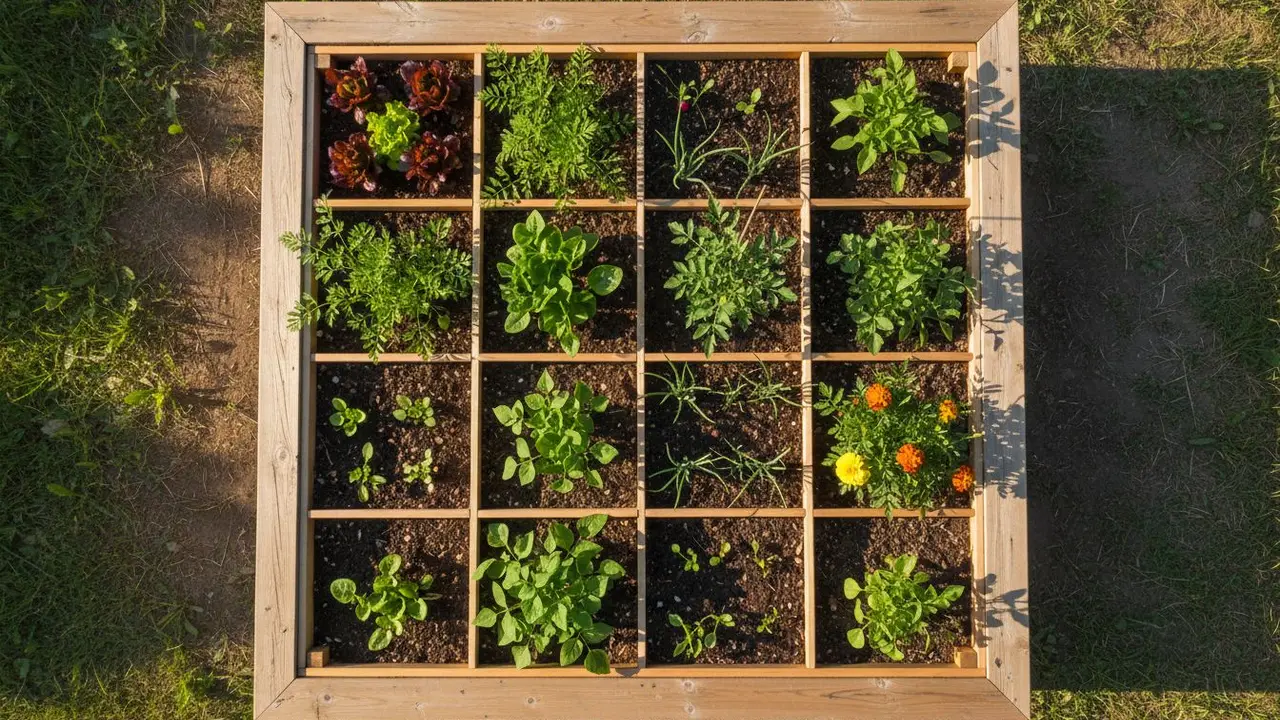
If the idea of laying out a whole vegetable garden feels daunting, square foot gardening is the friendliest way in. Devised by Mel Bartholomew in the 1970s and beloved by beginners ever since, it turns a garden into a simple grid of one-foot squares, each planted as its own tiny plot, so there is no complicated spacing to work out and no bare rows to weed. It is a method built for growing a surprising amount of food in a small, tidy, manageable space, which makes it perfect for beginners, small yards, and gardening with children. You need only a small raised box, some good soil, and a grid, and you are away. This guide walks through what square foot gardening is, why it works so well, and exactly how to build, plant, and care for one.
What Is Square Foot Gardening?
Square foot gardening is a method of intensive planting in a compact raised bed, most classically a box four feet by four feet, divided by a visible grid into sixteen one-foot squares. Each square becomes its own mini garden, planted with a set number of a single crop depending on that plant's size, so instead of measuring out long rows you simply fill square by square. The physical grid laid across the top, made of thin wood, string, or lath, is the method's signature, keeping everything neat, organized, and easy to plant and manage. The result is a dense, productive little garden where every inch is used and nothing is wasted on wide row spacing.
Why Square Foot Gardening Works So Well
The method has become a beginner favorite because it solves so many of the things that make gardening feel hard. It grows a lot in a little space, fitting far more into a small bed than traditional rows ever could. It removes the guesswork, since the simple per-square plant counts replace fiddly spacing calculations. It dramatically cuts the weeding, because the dense planting quickly shades the soil and leaves little room for weeds, and it uses less water and less soil than a sprawling row garden. Above all it is tidy and contained, which makes it feel manageable rather than overwhelming, and its small, defined size is ideal for a patio, a courtyard, or a scrap of yard, fitting neatly into the world of container and small-space growing. The first year I tried a single square foot box after struggling with a big weedy row garden, I was amazed how much it produced for how little work, and how much less it felt like a chore.
Building Your Square Foot Garden
Building a square foot bed is a simple weekend job. Make or buy a bottomless box, the classic size being four feet by four feet so you can reach the middle from any side without stepping in, and around six to twelve inches deep. Where your soil is poor or you want it on a patio, you can even build it with a solid base as a raised table. Set it in a spot with full sun, at least six to eight hours a day, on level ground. Then add the defining feature: a grid dividing the bed into sixteen equal one-foot squares, made from lengths of thin wood, lath, or even taut string, laid across the top and fixed at the edges. This is essentially a specialized raised bed, and the same no-tread, deep-soil principles apply; it also works beautifully as a no-dig bed, built up in place on top of cardboard.
The Soil: Filling Your Box
Because the bed is shallow and intensively planted, the soil you fill it with matters more than in an ordinary garden. The classic square foot recipe, "Mel's Mix", is equal parts compost, coir or peat, and coarse vermiculite, which makes a light, fertile, moisture-holding medium that never needs digging. You do not have to follow it to the letter, though: a rich, well-drained mix based on plenty of good compost will grow excellent crops, and blending in several kinds of compost adds a range of nutrients. Whatever you use, aim for a loose, fertile, free-draining fill, and top it up with fresh compost each season. A soil test is worth doing if you are mixing your own to check the balance.
How Many Plants Per Square?
Here is the heart of the method, and what makes it so beginner-friendly: rather than measuring spacing, you plant each square with a set number of plants based on their mature size. The counts fall into a simple pattern.
- One per square for large plants: a tomato, pepper, cabbage, or broccoli.
- Four per square for medium plants: lettuce, chard, or a large marigold.
- Nine per square for smaller plants: spinach, beets, or bush beans.
- Sixteen per square for the smallest: carrots, radishes, and onions.
To space them evenly, simply divide the square into the right number of spots with your fingers and pop a seed or seedling into each. This one-four-nine-sixteen system is the whole method in a nutshell, and it means a beginner can plant a balanced, well-spaced garden without ever consulting a spacing chart. When you plant this densely, thinning becomes minimal because you sow the right number from the start. The first time I sowed sixteen carrots into a single one-foot square and later pulled a whole fistful of roots from that one small patch, the productivity of the method finally clicked for me.
Planting, Succession, and Growing Up
The grid makes an ongoing, productive garden almost automatic. Plant square by square with whatever you fancy, and the moment a square is harvested, refresh it with a trowel of compost and replant it with something new, which makes square foot gardening a natural home for succession planting and a continuous harvest rather than a single glut. Mix quick crops like radishes and lettuce with slower ones so squares turn over at different rates. And because floor space is limited, grow upward: fit a trellis or netting along the north side of the box for climbing beans, cucumbers, or a cordon tomato, exactly the vertical gardening trick that multiplies what a small bed can hold. Positioning tall crops on the north side keeps them from shading the squares in front, the same rule that guides any good garden layout.
Companions and Rotation in the Grid
A square foot garden is a polyculture by its very nature, since neighboring squares hold different crops, which builds a natural diversity that confuses pests and makes companion planting effortless: pop a square of basil beside your tomato, tuck marigolds among the vegetables, and let the mix do its work. Over the seasons, move your crop families around the squares rather than replanting the same thing in the same spot, practicing crop rotation on a small scale to keep the soil healthy, which is easy to track since each square is so clearly defined. I keep a simple sketch of my grid each year, noting what went where, and rotating families around the little squares has kept my box productive and trouble-free for years.
Caring for a Square Foot Garden
Looking after a square foot bed is refreshingly light work. Because the plants are packed close and shade the soil, weeds struggle to get a foothold, so weeding all but disappears. Watering is easily done by hand, square by square, or with a drip line, and the small, contained bed dries out more slowly than scattered rows, though a raised or table bed will need checking in hot weather. Feed the garden simply by working a little fresh compost into each square as you replant it, which keeps the intensively grown crops well nourished without separate fertilizing. That is really all there is to it; the tidy grid makes every task quick and obvious, which is exactly why the method suits busy people and beginners. The season I gave a square foot box to my children to tend, the clear grid made it so easy for them to see what to plant and water that they kept it going all summer with barely any help from me.
Is Square Foot Gardening Right for You?
Square foot gardening shines for beginners, for small spaces, and for anyone who likes a neat, low-maintenance, high-yield garden they can keep on top of easily. It is a wonderful way to grow a salad garden, herbs, and a mix of vegetables in a compact spot, and a brilliant introduction to growing food. Its main limit is scale: if you want to grow a lot of one staple crop, such as rows of potatoes or a big block of sweet corn, traditional rows or larger beds make more sense, and you can happily run a square foot box alongside them. For most home growers, though, and especially those just starting out, it is hard to think of an easier or more rewarding way to begin. My honest advice is to build a single four-by-four box this season, fill it with a rich compost mix, lay a grid across the top, and plant it up square by square using the one-four-nine-sixteen rule. Within weeks you will be harvesting from your own tidy little garden, and wondering why vegetable growing ever seemed complicated. For more on growing your own food, our gardening library and gardening basics have a guide for every step, including how to plan a garden layout and how to start a vegetable garden.
Sources
About the Author
Lucas is a writer and researcher focused on sustainable agriculture and permaculture practices.