
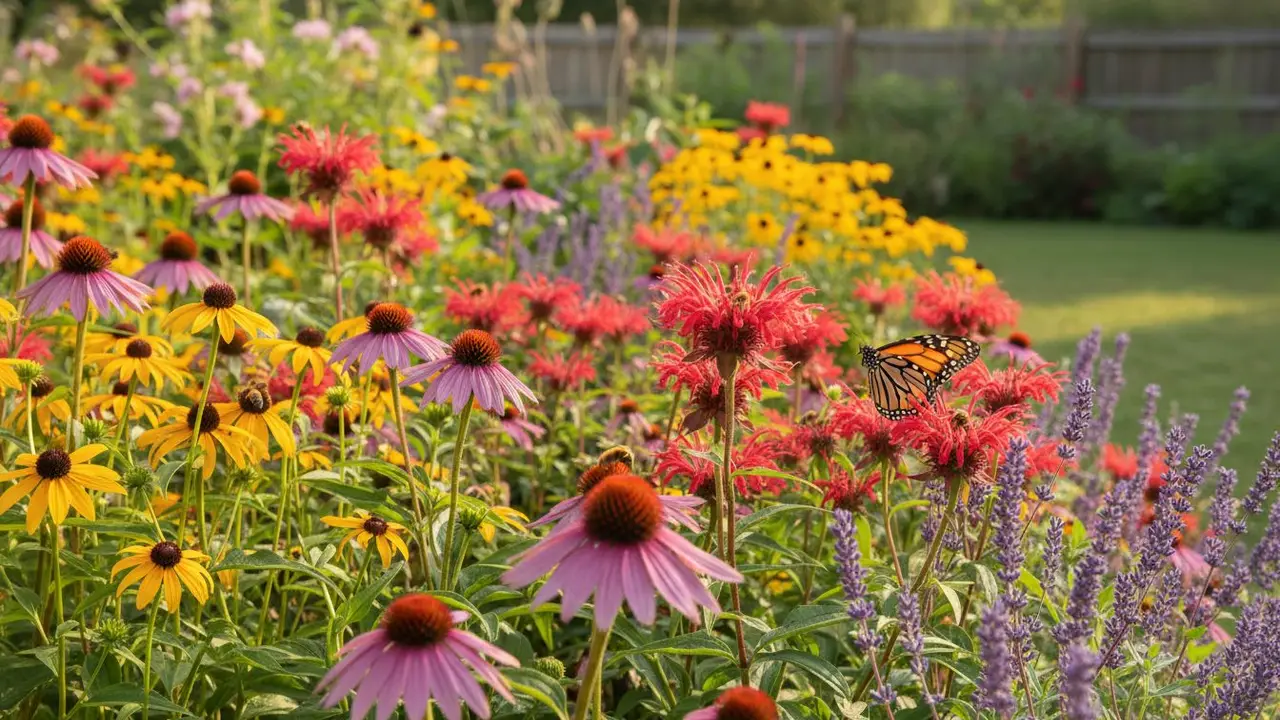
Of all the things you can grow, few give back as much, to you and to the wider world, as a pollinator garden. A patch of the right flowers will hum with bees, flutter with butterflies, and quietly help power the entire food system, all while making your own vegetables and fruit more productive. The summer I first planted a drift of bee balm and coneflowers, a corner of my yard that had been silent came alive within weeks, thick with bees from dawn to dusk, and I have been hooked on gardening for pollinators ever since. With pollinators in serious decline, home gardens have become a genuine lifeline for them, and the good news is that a pollinator garden is beautiful, low-maintenance, and easy to create. This guide covers why pollinators matter, the best plants to grow, how to design the garden, and the mistakes to avoid.
Why Plant for Pollinators?
Bees, butterflies, moths, beetles, flies, and hummingbirds pollinate the great majority of the world's flowering plants and roughly a third of the food we eat, yet their populations are falling under the pressure of habitat loss, pesticides, and disease. As the Xerces Society, the leading voice in pollinator conservation, emphasizes, the patchwork of home gardens can add up to real, meaningful habitat, and every garden that offers food and shelter helps.
The rewards are not only ecological. A garden buzzing with pollinators sets far more fruit and vegetables, because so many crops depend on them: squash, cucumbers, and melons, the buzz-pollinated tomatoes and peppers, and above all the berries and tree fruit whose every blossom needs a visit to become fruit. The first year my squash grew beside a young pollinator patch, the difference in how much fruit set was impossible to miss. A diverse flower garden also draws in the predatory beneficial insects that keep pests in check, tying neatly into a whole-garden approach to organic pest control.
Know Your Pollinators
"Pollinator" covers a wonderfully varied cast, and knowing who you are gardening for helps you plant for all of them. Bees are the champions, and while honeybees get the headlines, it is the thousands of species of native bees, most of them solitary and ground-nesting, that do the bulk of the work in a garden. Butterflies and moths pollinate as they sip nectar, the moths working the night shift on pale, fragrant flowers. Hoverflies, whose larvae also devour aphids, along with many beetles and other flies, are underrated pollinators of a great many plants. And across much of the Americas, hummingbirds pollinate tubular red and orange blooms. Because each of these favors different flower shapes, colors, and bloom times, a diverse planting is exactly what welcomes the whole community rather than just a favored few.
The Four Things Pollinators Need
A true pollinator habitat, rather than just a pretty flowerbed, provides four things.
- Flowers for food, supplying nectar and pollen, ideally with something in bloom from early spring right through to late fall.
- Host plants for larvae. Many butterflies and moths need specific plants to lay eggs on and feed their caterpillars; the monarch, famously, can only raise its young on milkweed.
- Water, in the form of a shallow dish with pebbles or a muddy edge for insects to land on and drink safely.
- Shelter and nesting sites. Most native bees are solitary and nest in bare ground or hollow plant stems, so undisturbed soil, standing stems, and leaf litter are as important as the flowers.
Of these four, nesting habitat is the most overlooked. You can help enormously just by leaving a patch of bare, undisturbed soil in a sunny spot for ground-nesting bees, keeping some hollow or pithy stems standing through the winter, and letting a small brush pile or a drift of fallen leaves remain in a corner. A purchased or homemade "bee hotel" of drilled wood or bundled reeds can house cavity-nesting bees as well, provided you keep it clean and dry. None of this is tidy in the conventional sense, but a slightly wilder garden is a far more welcoming one.
The Best Plants for Pollinators
The heart of a pollinator garden is a diverse, long-blooming mix of flowers, and a few principles guide the choice. Favor native plants, which co-evolved with your local pollinators and offer them the best forage; plant a variety of flower shapes and colors to suit different pollinators; set each kind in generous clumps or drifts so they are easy to find and work; and choose single, open flowers over frilly double cultivars, which are often bred at the expense of the nectar and pollen that matter. The Xerces Society's regional plant lists are the best place to find what suits your area.
Some of the most reliable pollinator plants, many of which double as garden favorites, include:
- Native perennials: echinacea and other coneflowers, bee balm, milkweed, yarrow, sunflowers, and, crucially for late-season bees, asters and goldenrod.
- Flowering herbs: let lavender, thyme, oregano, borage, and dill bloom and they become pollinator magnets, which is a lovely reason to keep a few in the herb garden or a medicinal bed from being cut too hard.
- Easy annuals: nasturtium, calendula, and marigolds flower generously all season from a packet of seed.
- Cover crops and more: a patch of clover or a stand of comfrey feeds bees while doing other good work, tying into the same soil-building as cover crops.
The single most important design goal is continuous bloom. Aim for early flowers like fruit blossom and crocus, a strong mid-summer show of bee balm, coneflower, and lavender, and, most vital of all, late bloomers like asters and goldenrod that fuel bees as they prepare for winter, a season when forage is scarce and every flower counts.
Designing and Growing Your Pollinator Garden
You do not need much space or expertise. Michigan State University Extension's guidance on creating a pollinator garden boils down to a few practical steps. Choose a sunny, somewhat sheltered spot, since most pollinator plants and the insects that love them prefer the sun. Plant in bold clumps of at least three to five of each species rather than dotting singles about. Sketch out your bloom times so that something is always flowering. And build the garden on healthy soil the chemical-free, no-dig way, watering to get plants established, after which many natives prove wonderfully drought-tolerant and low-maintenance. Then add the finishing touches, a shallow water dish and some undisturbed ground or a bundle of hollow stems for nesting, and you have a true habitat rather than just a border.
Best of all, any size works. A pollinator garden can be a sweeping meadow, a single flowerbed, or a few well-chosen pots on a balcony; even a small, thoughtful planting makes a real difference. A trio of containers planted with lavender, a coneflower, and a few flowering herbs will draw bees to a paved patio that grew nothing before, and when clusters of such plantings repeat across a neighborhood, they begin to knit together the corridors of habitat that pollinators need to move safely through a landscape.
What to Avoid
A pollinator garden is defined as much by what you leave out as by what you plant.
- Pesticides. Insecticides are the most direct threat, and even ones labeled organic can kill bees, so never spray flowering plants, lean on the preventive, habitat-based methods in my organic pest control guide instead, and if you ever must treat a problem, do it in the evening when pollinators are not active.
- Over-tidiness. The impulse to cut everything back and rake the beds bare in autumn strips away exactly the nesting and overwintering habitat pollinators depend on. Leave the leaves and standing stems through winter and tidy up in spring instead. The first fall I resisted the urge to cut back my perennials, I later found native bees and other insects sheltering in the hollow stems, doing no harm and much good.
- Double flowers and sterile hybrids. Many showy, frilly cultivars produce little or no nectar and pollen; choose simpler, single-flowered forms.
Small Steps, Big Impact
The beauty of gardening for pollinators is how quickly small efforts pay off, for the insects and for you. Add a few native perennials with staggered bloom times, put the sprayer away, tuck in a patch of milkweed for the monarchs, whose caterpillars appeared on mine the very first summer, and leave a corner a little wild. Almost at once the garden will fill with bees and butterflies, your vegetables and fruit will set more heavily, and you will have turned even a small plot into a genuine refuge in a landscape that badly needs them. Few gardening choices give back so much for so little. For more on gardening in tune with nature, our sustainability library has a guide for every step.
Sources
- The Xerces Society — Pollinator Conservation
- Michigan State University Extension — Creating a pollinator garden
- Utah State University Extension — Pollinator-Friendly Gardening
- Royal Horticultural Society (RHS) — Plants for Pollinators
About the Author
Lucas is a writer and researcher focused on sustainable agriculture and permaculture practices.