
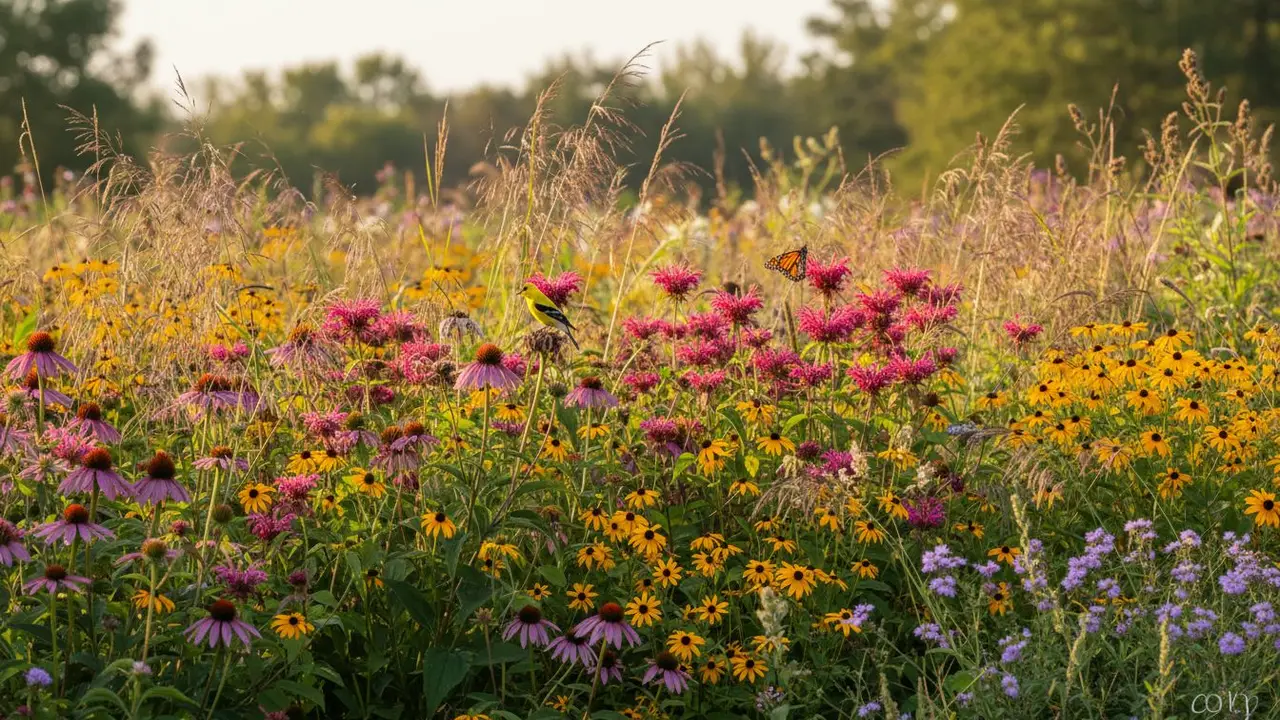
There is a quiet revolution happening in gardens, and it begins with a single, powerful choice: growing native plants. Gardening with native plants, the species that evolved in your region over thousands of years, does something no bed of imported ornamentals can. It rebuilds the local food web, supporting far more birds, butterflies, and beneficial insects, while asking for less water, less feeding, and far less fuss than the exotics most of us were sold. A native garden is beautiful and resilient, and it turns your own yard into a genuine act of ecological restoration. When I first swapped a thirsty exotic border for a planting of coneflowers, bee balm, and asters, two things happened almost at once: my watering dropped away to almost nothing, and the garden filled with life. This guide covers why natives matter, the science behind them, how to choose them, and how to garden with them.
What Are Native Plants, and Why Do They Matter?
A native plant is one that occurred naturally in your region before large-scale settlement, shaped over millennia to fit the local climate, soils, and wildlife. That long shared history is the whole point, because it means native plants are woven into the local food web in a way that imported species simply are not.
Here is the heart of it. Native insects, and caterpillars above all, evolved to eat native plants and mostly cannot digest exotic ones. Those insects are the base of the food web: they are what songbirds gather by the hundreds to feed their nestlings. The entomologist Doug Tallamy has shown that a single native oak can support hundreds of species of caterpillars, while a non-native ornamental like a ginkgo supports almost none, which is why a yard full of exotics can look green and lush yet be nearly silent. The National Wildlife Federation, through its Native Plant Finder built on Tallamy's research, and the Audubon Society, which champions native plants for birds, both drive the same point home: the overwhelming majority of our land birds raise their young on insects, so without native plants to feed the insects, there are no birds. I saw this made real the spring I watched a pair of chickadees make trip after trip to a native tree, ferrying beakfuls of caterpillars back to their nestlings; that one tree was a bird feeder I never had to fill. Natives are also the best forage of all for the bees and butterflies of a pollinator garden.
The Payoff for Your Garden
Supporting wildlife is reason enough, but native plants also make life easier for the gardener, because a plant growing where it evolved is a plant in its element.
- Low-maintenance. Adapted to your local conditions, established natives need little to no watering, no fertilizer, and rarely suffer serious pests or disease, sparing you most of the coddling exotics demand.
- Resilient and water-wise. Deep-rooted natives shrug off the local weather extremes and drought that flatten pampered ornamentals. During one dry summer my native bed barely flagged while the exotics beside it wilted, which fits neatly with a water-wise, drought-tolerant approach to the whole garden.
- Fewer inputs. Less water, no feeding, and no need for sprays make natives a natural fit for a low-input, chemical-free garden and a whole-garden approach to organic pest control.
- A sense of place. Native plantings give a garden the distinctive character of its region and a changing, season-long show that ties it to the wild landscape around it, rather than the interchangeable, could-be-anywhere look of a big-box nursery display.
How to Choose Native Plants
Choosing well starts with knowing your place. "Native" is regional, so look to your ecoregion rather than just your state, and lean on the excellent free tools available: the National Wildlife Federation's Native Plant Finder ranks the best plants for your zip code, Audubon's native plant database filters for birds, and your local native plant society and Extension office know exactly what thrives nearby.
A few principles guide the rest:
- Right plant, right place. Match each plant to your site's sun, moisture, and soil, and it will flourish with almost no help, which is far easier than fighting a plant that does not belong.
- Prioritize keystone species. A handful of native genera, oaks, native cherries and willows, plus goldenrod, asters, and sunflowers, support the lion's share of the caterpillars and food web, so planting these delivers the biggest impact for wildlife.
- Plant in layers. Aim for a living structure: canopy or small trees like oak, serviceberry, and redbud; shrubs such as elderberry; and a rich understory of perennials like echinacea, bee balm, milkweed, asters, goldenrod, and yarrow.
- Source responsibly. Buy from native-plant nurseries, never dig plants from the wild, and ask for stock grown without neonicotinoid pesticides. Be a little wary of heavily bred "nativars," some of which lose their wildlife value when their flower color or leaf shape is altered.
How to Garden with Natives
Once the right plants are in the right places, a native garden mostly runs itself, but a few practices make it thrive and keep it looking intentional. Plant in bold drifts and masses, as with any wildlife planting, both for visual impact and to make the plants easy for insects to find. Combine the layers above, and if you have room for even one keystone tree, an oak is arguably the single highest-impact plant you can add to a property. Water and mulch through the first year or two to establish the plants, then step back and let them settle in.
It helps to embrace a slightly wilder aesthetic, leaving seed heads and standing stems through winter as food and shelter, and letting some plants self-sow. That said, a native garden need not look unkempt: a mowed edge, a clear path, or a tidy border gives what designers call "cues to care," the visible signs of intention that tell neighbors the wildness is on purpose. I learned that firsthand when a neighbor who thought my native bed looked messy came around completely once I ran a crisp mown strip along its front. One of the most powerful moves of all is simply to shrink the lawn, converting a patch of resource-hungry, wildlife-barren turf into native beds or a small meadow.
Common Myths About Native Plants
A few misconceptions keep gardeners from trying natives, and every one is easy to dispel.
- "Native gardens look messy." Only if you let them. Natives can be arranged as formally or as loosely as you like, and the cues-to-care approach keeps even a naturalistic planting looking deliberately tended.
- "Native means invasive." The opposite is true. Invasive plants are almost always non-native species that run rampant precisely because nothing here evolved to keep them in check; natives are held in balance by the local web of life.
- "It has to be all or nothing." Not at all. You can add natives gradually alongside your existing ornamentals and vegetables, and every native you tuck in strengthens the food web, so a partial conversion is still a real gain.
- "Natives are boring." Far from it. Coneflowers, bee balm, cardinal flower, and asters are as showy as any nursery plant, with the enormous bonus of being alive with birds and pollinators.
Natives in the Food Garden
Native plants and a productive food garden are natural allies. Many native berries are both wildlife food and delicious human food, so a hedge of elderberry, serviceberry, and blackberry, or a pawpaw and a persimmon tree, feeds you and the birds alike, as I explore in my guide to growing berries. Native flowers woven among your vegetables pull in the pollinators that set your fruit and the beneficial insects that hunt your pests, so the whole garden grows healthier for their presence.
Doug Tallamy calls the vision "Homegrown National Park," the idea that if enough of us convert our yards to natives, we stitch together a continent-spanning web of habitat one garden at a time. It is a rare kind of gardening where the humblest patch genuinely matters, because our national parks and wild lands, precious as they are, cover too little ground to sustain biodiversity on their own; the millions of acres tied up in yards and gardens are where much of the recovery will have to happen, one planting at a time. My honest advice is to start small and start now: look up a few keystone plants for your area, add a native tree or a drift of asters and goldenrod, put the sprayer away, and let the wildness in. Almost at once your garden will grow quieter to tend and louder with life. For more on gardening in tune with nature, our sustainability library has a guide for every step.
Sources
- National Wildlife Federation — Native Plant Finder
- National Audubon Society — Native Plants
- Michigan State University Extension — The benefits of native plants
- The Xerces Society — Native Plants for Pollinator Conservation
About the Author
Lucas is a writer and researcher focused on sustainable agriculture and permaculture practices.