
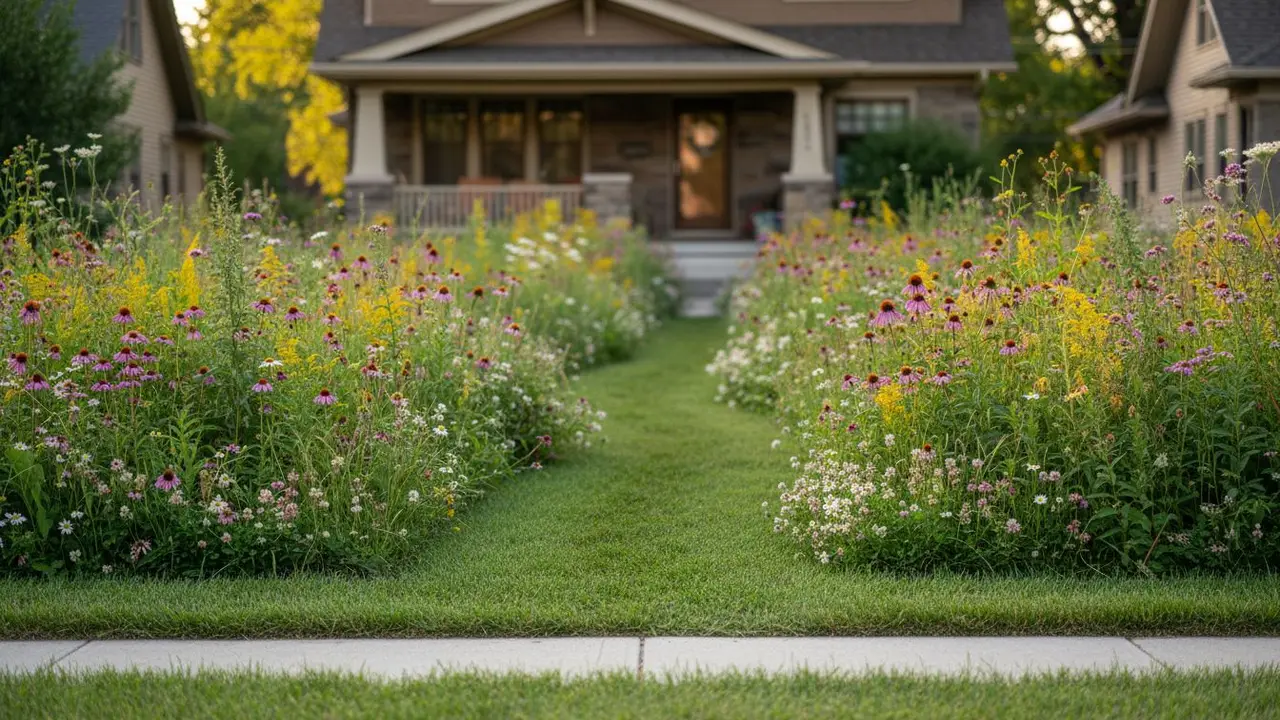
The classic lawn, that tidy expanse of mown, single-species turf, is one of the most-grown "crops" in the country and one of the least useful. It drinks water, burns fuel, demands fertilizer and herbicide, eats up weekends, and gives back almost nothing to the wildlife around it. That is why so many gardeners are rethinking it, and why lawn alternatives have become one of the most satisfying moves in sustainable gardening. Replacing even part of your lawn with a wildflower meadow, native beds, low groundcovers, or a flowering "bee lawn" saves you work and resources while turning dead green space into living habitat. The best news is that it is not all-or-nothing: every square foot you convert helps, and I found reclaiming my own lawn oddly liberating once I started. This guide covers why to rethink the lawn and the best ways to do it.
Why Rethink the Lawn?
A conventional lawn is surprisingly expensive, in every sense. It is the largest irrigated planting in the country, soaking up enormous quantities of water, and keeping it green and weed-free the usual way means regular mowing, with its fuel and emissions, along with synthetic fertilizers and the herbicides and insecticides that harm pollinators and wash into local waterways. For all that input, a mown turf monoculture is close to an ecological desert, offering little food or shelter to the bees of a pollinator garden or the songbirds of a bird-friendly yard, and almost nothing to the soil life beneath it.
Trade some of that turf for a living alternative and the ledger flips. You mow less or not at all, water far less, and stop spraying, while the same ground begins to hum with pollinators, feed birds, build soil, and soak up stormwater instead of shedding it. You need not tear it all out, either. Keep a small mown path or play area if you use one, and convert the rest.
The scale is what makes it matter. Turfgrass blankets tens of millions of acres across the country, more ground than any single irrigated food crop, which means the collective potential of home yards is enormous: if even a modest fraction of that turf became habitat, it would add up to a vast, connected patchwork of refuge. Your own lawn is one small tile in that mosaic, and converting it is a rare case where an easy, money-saving choice is also a genuinely consequential one.
The Best Lawn Alternatives
The right alternative depends on how you use the space, how much foot traffic it gets, your climate, and your appetite for change. Here are the main options.
- A native meadow or planting. Converting lawn to native perennials and grasses is the single biggest win for wildlife, transforming a green desert into a living prairie that blooms for months and needs mowing only once a year. This is the powerhouse alternative for a sunny area you do not need to walk on.
- A bee lawn. If you want to keep a walkable, mowable lawn, overseed the grass with low-growing flowers so it feeds pollinators while still functioning as a lawn. Research from the University of Minnesota Extension on establishing a bee lawn pairs fine fescues with flowers like Dutch white clover, self-heal, and creeping thyme; the result stays green, needs less water and fertilizer, and buzzes with bees.
- Groundcover carpets. For low-traffic areas, a living carpet of tough, low groundcovers replaces turf and rarely, if ever, needs mowing. Fragrant creeping thyme, low-growing chamomile, clover, creeping sedum, and moss in the shade all make a soft, often flowering surface.
- A clover lawn. Sowing micro-clover or Dutch white clover, alone or blended into grass, gives you a soft, drought-tolerant lawn that stays green in dry spells, needs no fertilizer because it fixes its own nitrogen, and offers a steady supply of bee forage.
- A water-wise or edible conversion. In dry climates, replace turf with a xeriscape of drought-tolerant plants and mulch; or, best of all for some, turn a sunny lawn into vegetable beds, berry bushes, or a small food forest and grow dinner where you once grew grass, converting a costly patch of turf into one that actually pays you back in food.
How to Convert Lawn to Something Better
Whatever you plant, the first job is to remove the existing turf, and the permaculture-friendly way to do it needs no herbicide and no back-breaking digging. My preferred method by far is sheet mulching: lay overlapping cardboard directly over the grass, top it with several inches of compost and mulch, and let it smother the turf over a few months while it builds rich soil beneath. It is the same no-dig approach that starts a new garden bed, and it turns lawn removal into soil building in one move. Where you need to plant sooner, you can strip the sod by hand or solarize it under clear plastic through a hot summer; either way, skip the chemical shortcut.
Once the grass is gone, plant your chosen alternative: sow a native meadow from seed or set out plugs, overseed a bee lawn into thinned turf, dot in groundcover plants, or build vegetable beds. The golden rule is to start small. Convert a single strip or a sunny corner first, learn what thrives, and expand from there rather than tackling the whole yard at once. Plan to water and weed through the first year while things establish, and know that a meadow or native planting takes a couple of seasons to truly fill in and hit its stride.
Living with a Lower-Lawn Yard
A wilder yard is a beautiful thing, but a little intention keeps it welcome in a conventional neighborhood. Lean on the "cues to care" I describe in my guide to gardening with native plants: crisp mown edges, a clear path through or around the planting, and defined borders all signal that the wildness is deliberate rather than neglect. It is also worth checking any local weed ordinances or homeowners-association rules before you let an area grow tall, since some still restrict unmown ground. And there is no shame in keeping a modest patch of real lawn for a play space or a path; the goal is less lawn, not necessarily none.
The rewards arrive quickly. When I sheet-mulched a thirsty stretch of my own lawn and sowed it to native meadow and clover, I stopped mowing and watering it entirely, reclaimed the hours and fuel that patch used to cost me every week, and watched it fill within a season with bees, butterflies, and birds that had never bothered with the turf. A bee-lawn area I overseeded with clover stayed stubbornly green through a drought that browned the grass around it, all without a drop of fertilizer.
Common Concerns About Ditching the Lawn
A few worries hold people back from converting lawn, and each has a reassuring answer.
- "Won't it look messy?" Not if you frame it. A mown edge, a defined path, and tidy borders make even a wild meadow read as intentional and cared-for rather than neglected.
- "Isn't clover a weed?" Only by a fairly recent definition. Clover was a standard, prized part of lawn seed mixes until the mid-twentieth century, when broadleaf herbicides that could not spare it quietly rebranded it a weed; a clover lawn is a return to an older, better idea, not a step down.
- "What about my neighbors or HOA?" Check any local weed ordinances and homeowners-association rules first, keep your cues to care crisp, and consider starting with a neat bee lawn or a defined native bed, which look conventional enough to win skeptics over before you go bolder.
- "Is it really less work?" After the initial conversion, emphatically yes: no weekly mowing, little or no watering, and no feeding or spraying, for years on end. The first summer I stopped mowing my converted patch, I did not miss a single Saturday behind the mower.
A Yard That Gives Back
Reducing your lawn is one of the highest-impact and most freeing choices in the whole sustainable garden. It saves water, money, fuel, and time, and it rebuilds the living habitat that a mown monoculture erased, tying together the pollinator garden, the native planting, and the bird-friendly yard into one resilient, humming whole. My honest advice is to pick one patch this season, smother it under cardboard and compost, and sow it to a meadow, a bee lawn, or a bed of natives. You will spend less time behind a mower and more time watching what shows up, and you may find, as I did, that the lawn was the least interesting thing you could have grown there. For more on gardening in tune with nature, our sustainability library has a guide for every step.
Sources
- University of Minnesota Extension — How to establish a bee lawn
- Michigan State University Extension — Lawn alternatives
- University of Maryland Extension — Lawn Alternatives
- The Xerces Society — Reduce Your Lawn for Pollinators
About the Author
Lucas is a writer and researcher focused on sustainable agriculture and permaculture practices.