
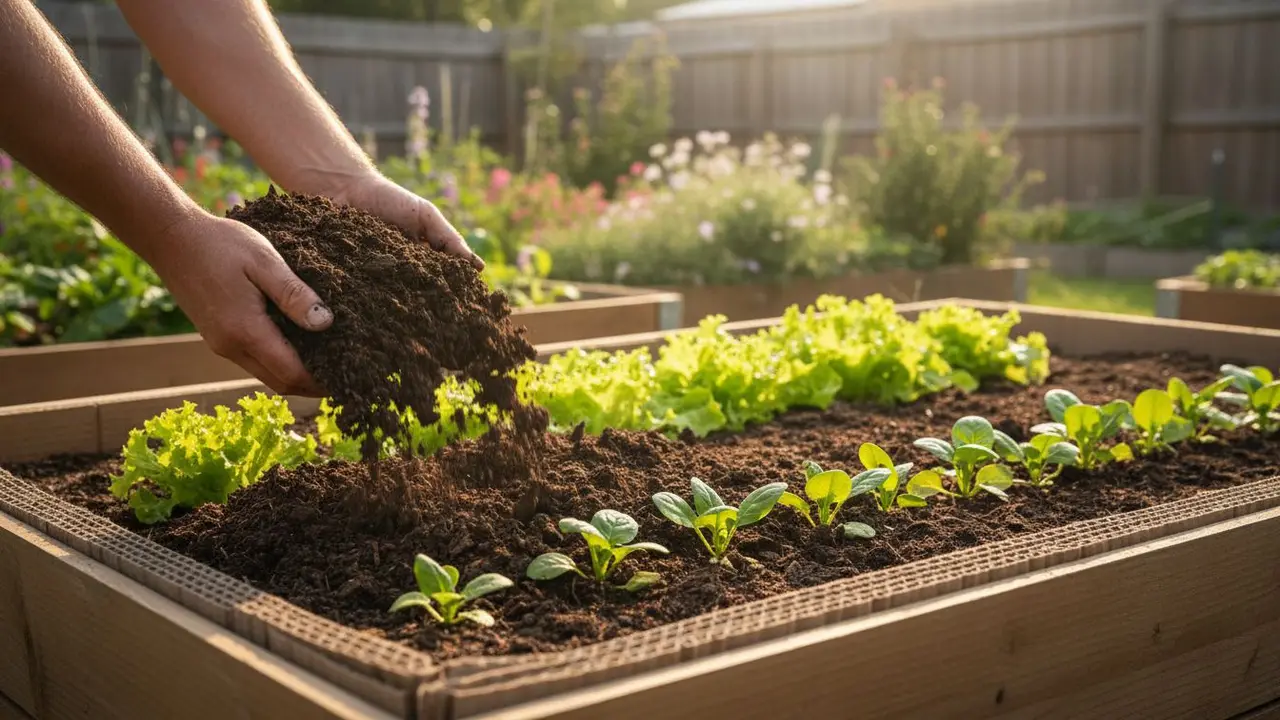
The first time someone told me to stop digging my garden, I thought they were joking. Every gardening book I had grown up with treated the annual rototill or double-dig as a sacred rite of spring. But after years of watching my beds, I have become a full convert to no-dig gardening, also called no-till gardening, and it has quietly become the most important soil practice in my whole system. The premise is almost offensively simple: instead of turning the soil over, you leave it undisturbed and feed it from the top with compost, letting the life in the soil do the tilling for you. Less work, better soil, fewer weeds. It sounds too good to be true, and yet the science and my own beds both keep proving it out.
In this guide I want to explain what no-dig actually means, why digging does more harm than good, the benefits you will notice in your own garden, and exactly how to start and maintain a no-dig bed. It is one of the clearest examples of a core permaculture idea: work with the living systems already present rather than against them.
What No-Dig Gardening Actually Means
No-dig gardening means growing food without inverting, turning, or loosening the soil with a spade, fork, or tiller. Rather than mixing amendments down into the ground, you lay them on the surface as a mulch, most often a layer of finished compost, and let earthworms, fungi, and the rest of the soil food web pull that organic matter down and incorporate it. The soil profile stays intact. Its structure, its channels, and its vast underground community are left in place to do their work.
People use "no-dig" and "no-till" more or less interchangeably, though "no-till" is the term you will see in farming and soil-science circles and "no-dig" is the one popularized in home gardening by growers like Charles Dowding. The distinction that actually matters is inversion. A one-time loosening with a broadfork, which cracks compaction without flipping the soil layers, still fits comfortably inside the no-dig philosophy. Turning a bed over with a spade or shredding it with a tiller does not. The whole method rests on one rule: do not turn the soil over.
Why Digging Hurts More Than It Helps
Digging feels productive. It looks tidy, it buries weeds, and it leaves a fluffy seedbed. The problem is that almost every one of those short-term wins comes at a long-term cost, and soil scientists have documented the trade-offs thoroughly.
It wrecks soil structure and the life inside it
Healthy soil is not loose dirt; it is a structured sponge of aggregates, pores, and channels built by roots, fungi, and earthworms over years. When you till, you shatter that architecture. According to the classic soil-health text published by SARE (Sustainable Agriculture Research and Education), tillage breaks apart soil aggregates and triggers a burst of microbial activity that rapidly burns through soil organic matter, so the very digging meant to enrich the soil ends up depleting the carbon and structure that make it fertile. Tillage also slices through the threads of mycorrhizal fungi, the symbiotic network that extends the reach of plant roots. As Michigan State University Extension explains, these fungi form partnerships that help plants take up water and nutrients, and repeated disturbance keeps that network from ever fully establishing.
It plants a fresh crop of weeds
Every square foot of soil holds a bank of dormant weed seeds waiting for light. Each time you dig, you dredge a new batch up to the surface and trigger them to germinate. This is why freshly tilled ground so reliably greens over with weeds two weeks later. Leave the soil undisturbed, keep it blanketed in compost and mulch, and that buried seed bank stays buried and dormant.
It causes compaction and erosion over time
Counterintuitively, the tool used to loosen soil is a leading cause of long-term compaction. Repeated tillage to the same depth smears and compresses the layer just below the blade into a dense "plow pan," while bare, disturbed surfaces crust over and wash away in heavy rain. The four soil-health principles promoted by the USDA Natural Resources Conservation Service (NRCS) begin with "minimize disturbance," followed by keeping the soil covered, keeping living roots in the ground, and maximizing diversity. No-dig gardening satisfies the first two almost by definition, and pairs naturally with the other two.
The Benefits You Actually Notice
The soil science is convincing, but what made me a believer was the difference in the beds themselves. A few benefits show up fast enough that any gardener will spot them in the first season or two.
Dramatically fewer weeds. This is the one that converts skeptics. The first year I converted a weedy corner of the yard to a no-dig bed, laying cardboard over the grass and topping it with four inches of compost, I spent a fraction of the time weeding that I did on my old dug rows. Because I was not constantly resurfacing seeds, the few weeds that did appear were shallow-rooted and lifted out with a finger.
Soil that teems with life. The spring after I stopped digging, I pushed a trowel into an established no-dig bed and found more earthworms in one scoop than I used to see in an entire tilled row. Undisturbed, mulched soil is exactly the cool, moist, food-rich habitat worms and microbes want, and their castings and tunnels are what keep the bed loose without any help from me.
Beds that hold moisture. During a dry August, my no-dig beds stay noticeably damp under their compost blanket while bare soil bakes and cracks. That surface layer shades the ground, slows evaporation, and lets rain soak in instead of running off, which means less time on the hose. It pairs especially well with drip irrigation run at the soil line.
Healthier, more disease-resistant plants. A living, well-structured soil grows plants with working immune systems, and the compost mulch also forms a barrier that stops soil-borne spores from splashing up onto lower leaves, one of the cultural tactics I rely on for preventing plant disease. My root crops especially reward the loose surface tilth: carrots push down straight and clean, and I can grow potatoes right on the soil surface under a deep mulch and simply pull the mulch back to harvest, no digging and no speared tubers.
How to Start a No-Dig Bed
The beauty of no-dig is that you can build a bed directly on top of existing lawn or weeds without removing a thing. The method is essentially sheet mulching, and it goes like this:
- Mow or knock down whatever is growing, but leave it in place. There is no need to strip the sod.
- Lay a light-blocking layer. Overlap sheets of plain cardboard or thick layers of newspaper across the whole area, overlapping the edges so no grass can find a gap. Wet it down. This smothers the vegetation beneath, which then rots in place and feeds the worms.
- Top with compost. Add three to four inches of finished compost directly on top of the cardboard. For a bed you want to plant into immediately, this compost layer is your growing medium.
- Plant into the compost. Sow seeds or set out transplants straight into that top layer. Their roots grow down, the cardboard softens over a few months, and the worms stitch the whole thing into the soil below.
If you are starting over ground that is severely compacted, this is the one moment I will pick up a tool: I run a broadfork through the subsoil once, rocking it to crack the hardpan without turning anything over, then build the bed on top. After that first season, the soil life takes over the aeration job for good.
Maintaining a No-Dig Garden Year to Year
Ongoing care is where no-dig really earns its name, because maintenance is almost embarrassingly light. Once a bed is established, you never dig it again.
Each year I simply spread an inch or two of fresh compost over the surface, ideally in late fall or early spring. That annual top-dressing is the entire fertility program for most of my beds; the worms carry it down and there is nothing to fork in. When compost is short, well-rotted manure or the output of a worm bin does the same job, and for hungry crops I supplement with a scatter of organic fertilizer on top.
To plant, I just pull the mulch aside, tuck in the seed or start, and draw the mulch back around it. To clear a spent crop, I cut it off at the base and leave the roots in the ground to decompose, feeding the soil and preserving those precious channels rather than ripping them open. Weeds get hoed off shallowly or hand-pulled while small, never dug. That is the whole routine.
No-Dig in Raised Beds and Small Spaces
No-dig is not just for in-ground plots. It is the natural way to run a raised bed: fill the frame once, then top-dress with compost every season and never disturb the profile again. It also dovetails with hugelkultur, where a mound built over buried wood is meant to be left intact so the rotting logs can feed the bed for years. In any container or bed, the principle holds: build a living soil once, feed it from the top, and stop stirring the pot.
Where No-Dig Fits in the Whole System
No-dig is a foundation, not the entire house. It works best woven together with the other practices that keep a garden resilient. You still want to rotate crop families to keep soil-borne pests and diseases from building up, even though you are not turning the soil. Keeping living roots in the ground through the off-season with cover crops feeds the same soil biology no-dig protects; when it is time to change over, you cut the cover crop down and leave its roots and residue as mulch rather than tilling it in. And because a biologically healthy soil grows sturdier plants, no-dig quietly supports a prevention-first approach to organic pest control too.
My honest experience after years of both methods is that no-dig gives me better soil for less work, season after season. The garden does the heavy lifting; I just keep the compost coming. If you want to go deeper on any single piece of the puzzle, from building your compost supply to choosing the right crops for a bed, our soil and gardening library has a guide for each step. But if you take away only one idea, let it be this: the healthiest thing you can do for your garden soil is often to leave it alone.
Sources
- Michigan State University Extension — No-till gardening
- Michigan State University Extension — Mycorrhizal fungi: the underground secret to a better garden
- SARE — Building Soils for Better Crops
- SARE — Cover Crops
- USDA Natural Resources Conservation Service (NRCS) — Soil Health: Principles to Manage Soil Health
About the Author
Lucas is a writer and researcher focused on sustainable agriculture and permaculture practices.