
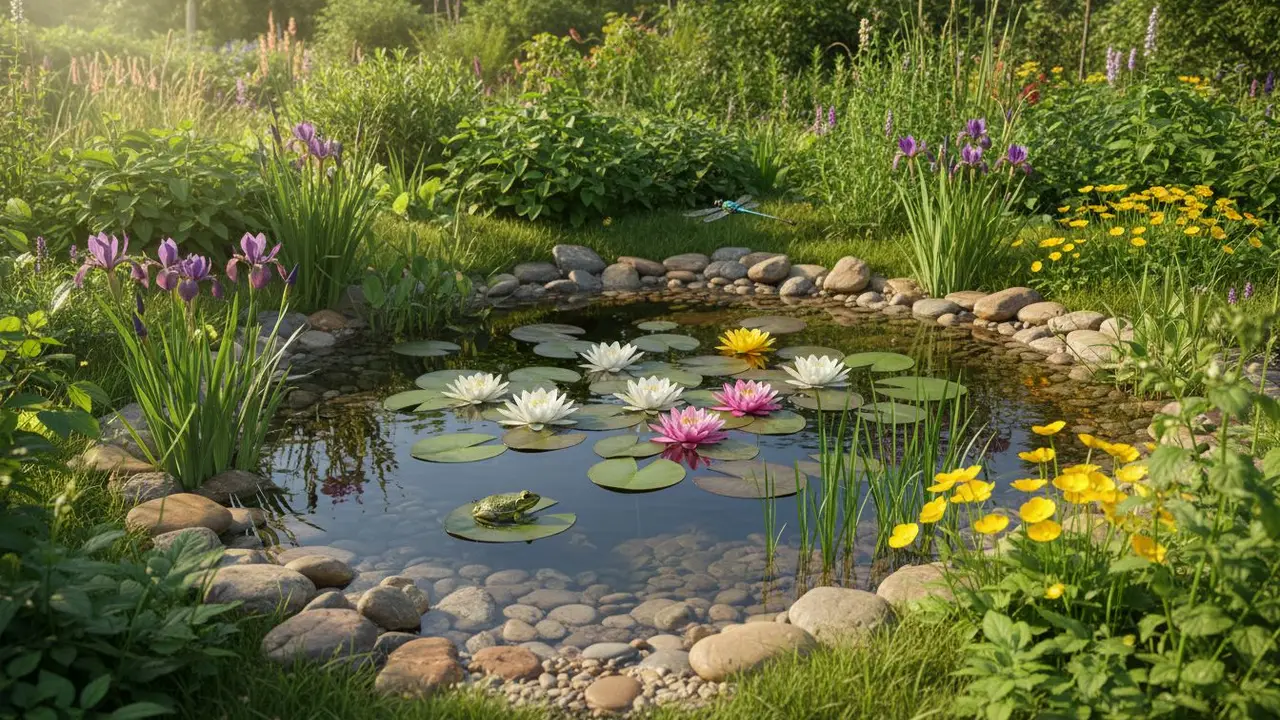
If you want to bring more life to your garden faster than any other single thing you can do, dig a pond. A wildlife pond is the closest thing there is to a magic trick in the garden: within days of filling it, creatures you have never seen before begin to arrive, and within a season it becomes the busiest, richest habitat on the whole property. Water is the one element most gardens lack, and adding even a small pool of it draws in frogs, toads, dragonflies, birds, bees, and a host of the predatory insects that quietly keep your pests in check. Best of all, a wildlife pond is not hard to make, needs no pump or filter, and largely looks after itself once it settles in. This guide walks through why a pond matters and exactly how to build one, from choosing the spot to planting it and welcoming the wildlife.
Why Build a Wildlife Pond?
A pond earns its place many times over, because water is the single biggest wildlife magnet you can offer. A garden without water asks its visitors to go elsewhere to drink and breed; a garden with a pond becomes a destination. Frogs, toads, and newts need clean, fish-free standing water to lay their eggs, and a garden pond can be the whole nursery for the next generation. Birds come to drink and bathe, dragonflies and damselflies hunt and breed over the surface, and countless insects live in and around the water, feeding everything above them in the food web.
The payoff reaches straight back into your vegetable beds. A pond is a powerhouse of natural pest control: the frogs and toads it raises are voracious eaters of slugs, and the dragonflies, ground beetles, and other predators it supports are exactly the beneficial insects that hunt aphids and caterpillars, which is why a pond fits so neatly into a whole-garden approach to organic pest control. It also gives the bees of a pollinator garden and the visitors to a bird-friendly yard a safe place to drink. The first summer after I dug my own small pond, I watched a toad take up residence beneath the marginal plants and my slug problem quietly shrank to almost nothing, and I have been a convert ever since.
Choosing the Right Spot
A little thought about where to put your pond pays off for years. Choose a spot that gets sun for at least half the day, since a pond in full or partial sun warms up quickly in spring, which spawning frogs and toads and basking dragonflies all prefer, and most water plants need the light to thrive. Avoid placing it in deep shade or directly beneath deciduous trees, where a steady rain of falling leaves would clog the water and rot down to foul it, though a pond near some cover and taller planting gives approaching wildlife a safe route in.
Look for reasonably level ground, and, if you can, a naturally low or damp part of the garden, which is easier to keep topped up. It is worth being clear that a wildlife pond is not the same as a rain garden, which is a shallow planted basin designed to soak up and drain runoff after a storm; a pond is a permanent body of standing water. The two make wonderful companions in a water-wise garden, but they do different jobs. Finally, check for buried pipes and cables before you dig, and site the pond where you can see it from the house, because a pond you can watch is a pond you will fall in love with.
How Big and How Deep?
The honest answer is that any pond is better than none, and even a half-barrel sunk in the ground will draw in life. That said, the bigger the pond, the more stable and varied the habitat it supports, so make it as large as your space and budget sensibly allow. What matters far more than sheer size, though, is a variety of depths. The ideal wildlife pond has a range of zones: a shallow, gently sloping margin only an inch or two deep, a mid-depth shelf for marginal plants, and at least one deeper area of around two feet, which stays cool in summer and keeps a little unfrozen water at the bottom through winter.
The most important design feature of all is a shallow, sloping "beach" on at least one side. This gentle slope lets frogs, hedgehogs, birds, and insects walk safely in and out to drink and bathe, and it prevents the pond from becoming a trap that creatures fall into and cannot climb out of. If you use a rigid preformed pond or a steep-sided container, always add a ramp of stacked stones or a rough plank so wildlife has a way out. This single detail does more for the pond's value than almost anything else.
Digging and Lining the Pond
With the spot chosen, building the pond is a straightforward weekend job. Autumn, winter, or early spring is the best time to make one, so it can settle in before the spring breeding season.
- Mark it out. Lay a rope or hose on the ground to shape the outline; natural, curving edges look better and create more habitat than straight lines. Aim for that shallow beach on at least one side.
- Dig in shelves. Excavate the deep zone in the middle, then cut a shelf or two at different depths around the sides for marginal plants, and grade one side up to the shallow beach. Remove any sharp stones and roots from the hole.
- Add underlay and liner. Line the hole with a protective underlay of old carpet, sand, or purpose-made matting, then a flexible pond liner, which molds to any shape and is the easiest way to make a natural-looking pond. Smooth it into the contours, leaving plenty of overlap at the edges.
- Fill and finish. Fill the pond with rainwater if at all possible, since tap water is high in nutrients that feed algae. Trim the liner, then hide and anchor the edges under turf, soil, or stones, tucking the beach edge down into the shallows so creatures can walk straight in.
Once it is filled, let the water sit for a week or two before planting so it can settle and de-chlorinate. It is normal for a new pond to go through a cloudy or green phase in its first few months while it finds its balance; resist the urge to interfere, because it almost always clears on its own as the plants establish and the ecosystem matures. My own pond turned pea-green in its first month and I very nearly drained and refilled it in a panic, but a few weeks later, as the oxygenating plants took hold, it cleared to glass entirely on its own.
Planting Your Pond
Plants are the heart of a wildlife pond, oxygenating the water, sheltering tadpoles and insects, and drawing in even more life, and native species are best because they support the local food web most fully. Aim to plant in four broad zones, and lean toward natives while avoiding vigorous invasive species that can choke a pond.
- Marginal plants grow in the shallow shelves with their roots underwater and their stems above, and they are where much of the pond's life happens. Native pickerelweed, marsh marigold, iris, rush, and sedge all give dragonfly nymphs a ladder to climb out on and give frogs cover.
- Floating-leaf plants like a native water lily shade part of the surface, which keeps the water cool and helps hold down algae, while giving frogs a lily pad to rest on.
- Submerged oxygenators live entirely underwater and are the pond's lungs, releasing oxygen and giving tadpoles and insects cover; a bunch or two gets the whole system breathing.
- The boggy edge. The damp ground around a pond is a habitat in its own right, perfect for moisture-loving natives like cattail (best contained, as it spreads), and a good place to weave in the wider native planting that ties the pond to the rest of the garden.
Beyond the water itself, plant the surrounds thickly with the same layered, native planting that feeds the rest of your wildlife: a drift of milkweed and yarrow for the pollinators, and a shrub like elderberry nearby for cover and berries. When I let the grass grow long on one side of my pond and planted the margin densely, the number of frogs and dragonflies that settled in the following year roughly doubled.
Let the Wildlife Come to You
Here is the most important, and hardest, rule of a wildlife pond: build it, plant it, and then wait. Wildlife finds new water with astonishing speed all on its own, so you do not need to introduce anything, and trying to hurry it usually does more harm than good.
- Do not add fish. This is the cardinal rule of a true wildlife pond. Fish eat tadpoles, insect larvae, and eggs, and they quickly turn a thriving amphibian nursery into a bare aquarium. A wildlife pond and a fishpond are two different things; choose wildlife.
- Do not import frogs or spawn. Moving spawn or frogs from another pond can spread disease and invasive species. Let your pond be colonized naturally; the frogs will find it, often within the first year.
- Never use chemicals near the water. Amphibians breathe and drink through their skin, so pesticides and weedkillers are especially deadly to them. A wildlife pond must be part of a chemical-free garden, full stop.
- Build habitat at the water's edge. A log pile, a few large stones, or a patch of long grass beside the pond gives frogs, toads, and newts damp shelter to hide and hibernate in, and turns the pond into a complete home rather than just a pool.
Then simply watch. The arrival of the first pond skater, the first darting damselfly, and the first frog is one of the great quiet pleasures of gardening, and it all happens without any further effort from you. I never added a single creature to my own pond, yet by its first spring frogs had found it and were spawning in the shallows, arrived from who knows where.
Caring for a Wildlife Pond
A well-made wildlife pond is close to self-sustaining, but a little seasonal care keeps it healthy. Top it up in dry spells, using collected rainwater rather than tap water whenever you can. Thin out excess growth if pond plants or a mat of blanketweed threaten to cover the whole surface, but always leave plenty, and lay what you pull on the bank for a day or two so the creatures in it can crawl back to the water. In autumn, either net the pond or scoop out fallen leaves before they sink and rot, since too much decaying matter fouls the water. And in a hard winter, if the surface freezes over, melt a small hole with a pan of hot water to let gases escape rather than smashing the ice, which shocks the creatures below. Beyond that, the golden rule is to leave it be: a pond that is fussed over less thrives more.
No Room? Make a Container Pond
You do not need a big garden, or any garden at all, to offer water to wildlife. A watertight container, an old half-barrel, a glazed pot with the drainage hole sealed, or a repurposed trough, makes a perfect miniature pond on a patio or balcony, tying neatly into the world of container gardening. Sink it into the ground or raise it up, add a stack of stones or a sloping branch so creatures can climb in and out, part-fill it with rainwater, and plant a small marginal or two and an oxygenator. Even a container this size will draw in pond skaters, breeding insects, and birds coming to drink, and it brings the same spark of life to a paved courtyard that a full pond brings to a lawn. A container pond also pairs beautifully with a water-wise planting or a patch reclaimed from thirsty turf, part of rethinking the lawn as living habitat.
A Pond Full of Life
Of all the ways to invite nature into a garden, none works faster or gives back more than a wildlife pond. It costs little, asks for a single weekend of work, and repays you with years of frogs and dragonflies, birdsong at the water's edge, and a steady, free army of pest-eating predators for your vegetable beds. The recipe could not be simpler: dig a hole with varied depths and a gently sloping beach, line it, fill it with rainwater, plant it with natives, and then, hardest of all, leave it alone and let the wild move in. My honest advice is to mark out a pond this season, even a small one or a half-barrel, and dig it before the year turns. A few months from now you will have the liveliest corner of the whole garden, and you will wonder why you waited. For more on gardening in tune with nature, our sustainability library and water library have a guide for every step.
Sources
- National Wildlife Federation — Backyard Pond
- Royal Horticultural Society — Wildlife Ponds: How to Make Them
- Penn State Extension — Plan a Backyard Wildlife Habitat
- Michigan State University Extension — Adding a water feature to your landscape
- National Wildlife Federation — Five Tips to Help Frogs and Toads in Your Yard
About the Author
Lucas is a writer and researcher focused on sustainable agriculture and permaculture practices.