
Every gardener fights weeds, but you do not need a single drop of herbicide to win. Learning to control weeds without chemicals is one of the most useful skills in the whole garden, and once you understand how weeds work, keeping them in check becomes far less of a battle and far more of a rhythm. Chemical weedkillers are a blunt tool: they harm soil life, drift onto the plants you love, wash into waterways, and, worst of all, do nothing to stop the next flush of weeds from sprouting. The organic approach is smarter than that. It leans on mulch, timing, a sharp hoe, and a handful of clever tricks to suppress weeds while building healthier soil in the process. This guide covers why weeds appear, the methods that actually work, and how to stay ahead of them all season long.
First, Understand Your Weeds
The secret to beating weeds without chemicals is to understand them, because a weed is simply a plant growing where you do not want it, and different weeds call for different tactics. Annual weeds like chickweed, purslane, and crabgrass sprout, flower, set seed, and die in a single season, so the whole game with them is to stop them from ever going to seed, since a single plant can shed thousands of seeds that wait years in the soil for their chance. The old saying holds: one year's seeding means seven years' weeding. Perennial weeds like bindweed, quackgrass, and thistle are a different problem, coming back year after year from deep roots or running rhizomes, so pulling the tops alone will not beat them; you have to exhaust or remove the roots.
Two ideas guide everything that follows. First, weed seeds need light to germinate, so anything that keeps the soil surface dark, whether mulch or a living canopy of your own plants, prevents most weeds from ever starting. Second, every time you dig or till, you drag a fresh batch of buried seeds up into the light and trigger them to sprout, which is a big part of why the low-disturbance, no-dig method grows so much cleaner over time. Keep the soil covered and undisturbed, and you have already won half the fight.
Smother Weeds With Mulch
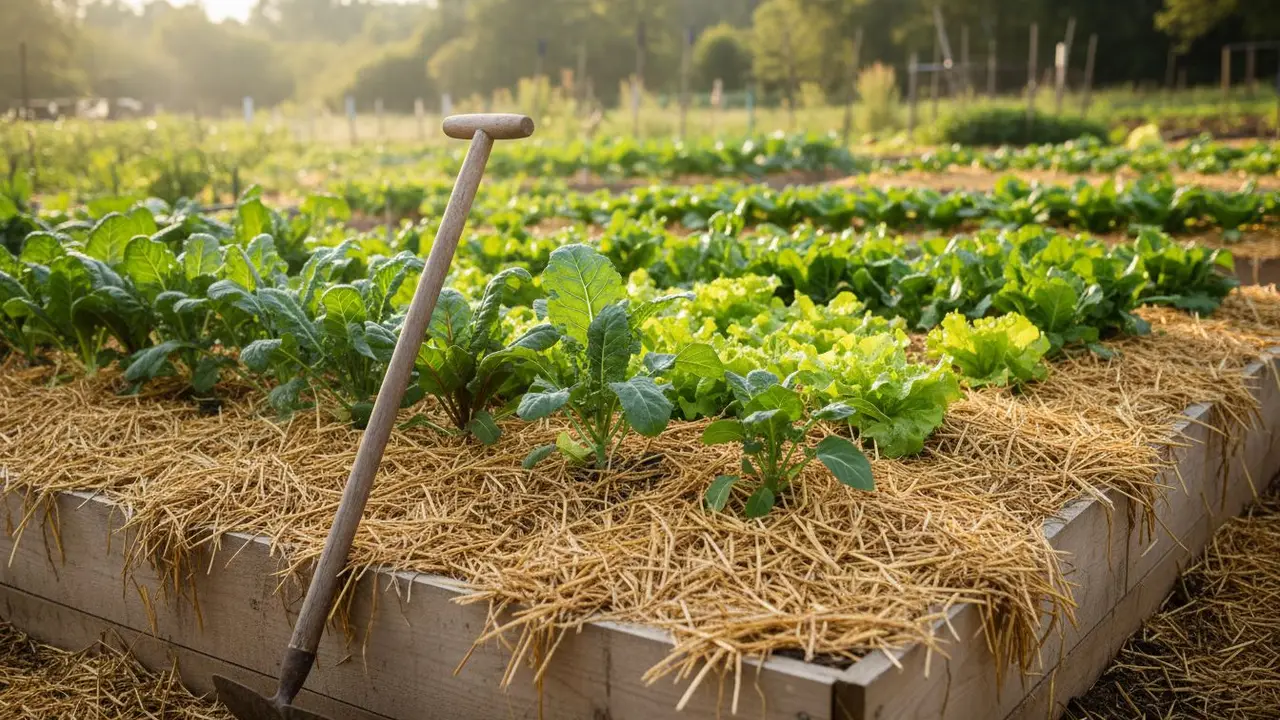
If there is one method that does more than any other, it is mulching, and it is the cornerstone of chemical-free weed control. A generous layer of organic mulch, spread two to four inches deep over your beds, blocks the light that weed seeds need to germinate while it holds in moisture, feeds the soil life, and moderates soil temperature. Straw, shredded leaves, grass clippings, wood chips, and compost all work; the coarser the material, the deeper you can lay it. The key is to mulch generously and to top it up as it breaks down, because a thin or patchy layer simply invites weeds through the gaps.
For clearing a badly weedy area or starting a new bed, the most powerful version of this is sheet mulching: lay overlapping cardboard directly over the weeds or grass, wet it down, and pile several inches of compost and mulch on top. The cardboard smothers everything beneath it, including tough perennial weeds and turf, while it slowly rots into the soil, and a few months later you have a clean, rich, ready-to-plant bed with no digging and no spraying. I reclaimed a bindweed-choked corner of my own garden this way after years of losing to it with a trowel, and smothering it under cardboard and a foot of wood chips finally broke its hold where nothing else had. Mulch is also what keeps the paths and edges of a raised-bed garden from turning into a weed nursery.
Stop Weeds Before They Start
The cheapest weed to deal with is the one that never grows, so a chemical-free garden leans hard on prevention. Beyond mulching, a few habits keep weed pressure low year after year.
- Stop tilling. Digging and rototilling bury this year's weed seeds and haul up last year's, guaranteeing a fresh green fuzz a week later. A no-dig approach that leaves the soil undisturbed steadily drains the reservoir of weed seeds near the surface, and gardeners who stop tilling almost universally report their weeding drops off sharply after a season or two.
- Crowd the weeds out. Bare soil is an open invitation, so space your crops to fill in and shade the ground as they mature, and slip quick crops between slower ones so no patch sits empty for long. A densely planted bed leaves weeds little room and little light.
- Cover the off-season. Do not leave beds bare over winter or between crops; sow cover crops like clover, rye, or buckwheat to blanket the soil, outcompete weeds, and feed the ground at the same time.
- Never let weeds seed. The single highest-value habit in the whole garden is to remove weeds before they flower and set seed. A few minutes spent pulling seedlings now saves hours of weeding next year, so deal with them while they are small.
- Water only where you want growth. A drip or soaker system delivers water straight to your crops' roots and leaves the paths and gaps dry, which quietly starves out a surprising number of weeds compared with an overhead sprinkler that waters everything equally.
Pull, Hoe, and Dig: Doing It by Hand
Even the best-prevented garden needs some hands-on weeding, and done well it takes far less time than people expect. The golden rule is to weed little and often rather than letting things get away from you, and to catch weeds while they are young, when a passing swipe uproots what would soon need a two-handed tug.
For open ground, a sharp hoe is the most efficient tool ever made for the job. Used with a shallow, slicing stroke just below the surface on a dry day, a hoe severs young weeds at the root and leaves them to shrivel in the sun, and you can clear a whole bed of seedlings in the time it would take to hand-pull a single row. The trick, which took me too long to learn, is to hoe when the weeds are barely visible and the soil is dry; I used to wait until I could see a real weed and then pull it, and switching to a quick weekly hoe of ground that looked almost clean cut my weeding time to a fraction of what it had been. Keep the blade sharp, hoe often, and hoe shallow so you slice weeds without dragging up new seeds.
Hand-pulling still has its place for weeds among your crops and for the big perennial offenders. Pull after rain or a watering, when the soil is soft and roots slide out whole, and with running or tap-rooted perennials like bindweed, dandelion, and thistle, get as much of the root as you can, since any fragment left behind will resprout. Truly stubborn perennials may need repeated removal over a season to exhaust the roots, but persistence beats them without a single chemical.
More Chemical-Free Weapons
Beyond mulch and the hoe, a few other organic methods handle specific situations, and it is worth knowing which actually work and which are more myth than method.
- Occultation (tarping). Covering a weedy area with a light-blocking tarp or black plastic for a few weeks to months kills everything beneath it by cutting off light, and it is a favorite of market gardeners for clearing ground with no digging and no spray.
- Solarization. In hot climates, clear plastic laid over moist soil through the heat of summer bakes the top layer, killing weed seeds and roots alike; it takes the hottest weeks of the year to work but can reset a badly infested bed.
- Boiling water and flame weeding. A kettle of boiling water or a pass with a flame weeder makes short work of weeds in the cracks of paths, patios, and driveways, where mulch is not an option. Keep both well away from your crops and from anything that might catch.
- A note on vinegar. Household and horticultural vinegar will scorch the tops of young annual weeds, but it does not touch the roots of established perennials, so they simply regrow; treat it as a spot burner for small weeds, not a real solution, and know it kills whatever green it touches.
What all these share is that they work with the weed's biology, cutting off light or overwhelming the plant, rather than poisoning the soil. Paired with good mulch and steady prevention, they cover nearly every weed problem a home garden throws at you.
Turn Your Weeds Into Assets
Here is the shift in thinking that makes peace with weeds: many of them are useful, and some are a gift. A great number of common garden weeds are edible and nutritious, so before you curse a patch, look closer. Dandelion greens, flowers, and roots are all edible and long prized as food and medicine; purslane is a succulent, lemony green rich in omega-3s; and stinging nettle, once cooked, is one of the most nourishing wild greens there is. I now deliberately leave a clump of nettle at the back of my plot for spring soup and to feed the butterflies, having spent years pulling the very thing I would happily pay for at a market.
Weeds earn their keep in other ways too. Deep-rooted comfrey and dandelion act as dynamic accumulators, mining minerals from far below the surface and making them available when their leaves break down, which is why comfrey is a permaculture staple for feeding beds. Almost any weed you pull, as long as it has not gone to seed, is free biomass for the compost pile, returning its nutrients to the garden rather than to the trash. And a low mat of clover, often dismissed as a lawn weed, is really a nitrogen-fixing living mulch that many gardeners now sow on purpose, as I cover in my guide to lawn alternatives. Weeds are also nature's own commentary on your soil: a flush of certain weeds can hint at compaction or a nutrient imbalance worth checking with a simple soil test.
A Season-Long Weeding Rhythm
Weed control without chemicals is less a single heroic push than a light, steady rhythm that keeps the garden ahead of the weeds all year. In early spring, get your mulch down thick before the weeds wake up, so the beds start the season covered. Through the growing months, make a habit of a quick weekly hoe or a few minutes of hand-pulling, always catching weeds young and never letting one go to seed. As crops mature and fill in, they shade the ground and do much of the work for you. In autumn, clear spent plants and tuck the beds in under mulch or a cover crop rather than leaving bare soil to grow a winter carpet of weeds. Keep that rhythm for a couple of seasons and the whole job shrinks, because you are steadily emptying the seed bank in the soil while never adding to it.
The reward is a garden that grows easier every year instead of harder. My own beds, after several seasons of never tilling, mulching deeply, and hoeing lightly and often, now come up so clean each spring that weeding is a pleasant few minutes rather than a dreaded chore, and I have not touched a bottle of weedkiller in over a decade. The same principles carry across the whole property, whether you are keeping a container garden tidy, holding down weeds in a low-water landscape, or knitting a wildlife-friendly planting of native plants so densely that weeds never find a gap.
Making Peace With the Weeds
Controlling weeds without chemicals turns out to rest on a few simple, reinforcing habits: keep the soil covered, stop disturbing it, catch weeds young, and never let them seed. Do that, lean on mulch as your first line of defense and a sharp hoe as your second, and you will keep weeds in check while your soil grows richer and your garden safer for the bees, birds, and beneficial insects of an organic garden. You may even come to see a few of them as the free food and free fertility they are. My honest advice is to start this week: mulch one bed deeply, put a sharp hoe by the door, and pull anything about to flower. Within a season you will spend less time weeding and none of it worrying about what you are spraying near your food. For more on growing in tune with nature, our gardening library and sustainability library have a guide for every step.
Sources
- University of Maryland Extension — Manage Weeds Without Chemicals
- Clemson Cooperative Extension — Weed Control in Landscapes: Non-Chemical Measures
- University of Minnesota Extension — Controlling weeds in home gardens
- Penn State Extension — Home Garden Weed Management
- Michigan State University Extension — Smother garden weeds with mulch
About the Author
Lucas is a writer and researcher focused on sustainable agriculture and permaculture practices.