
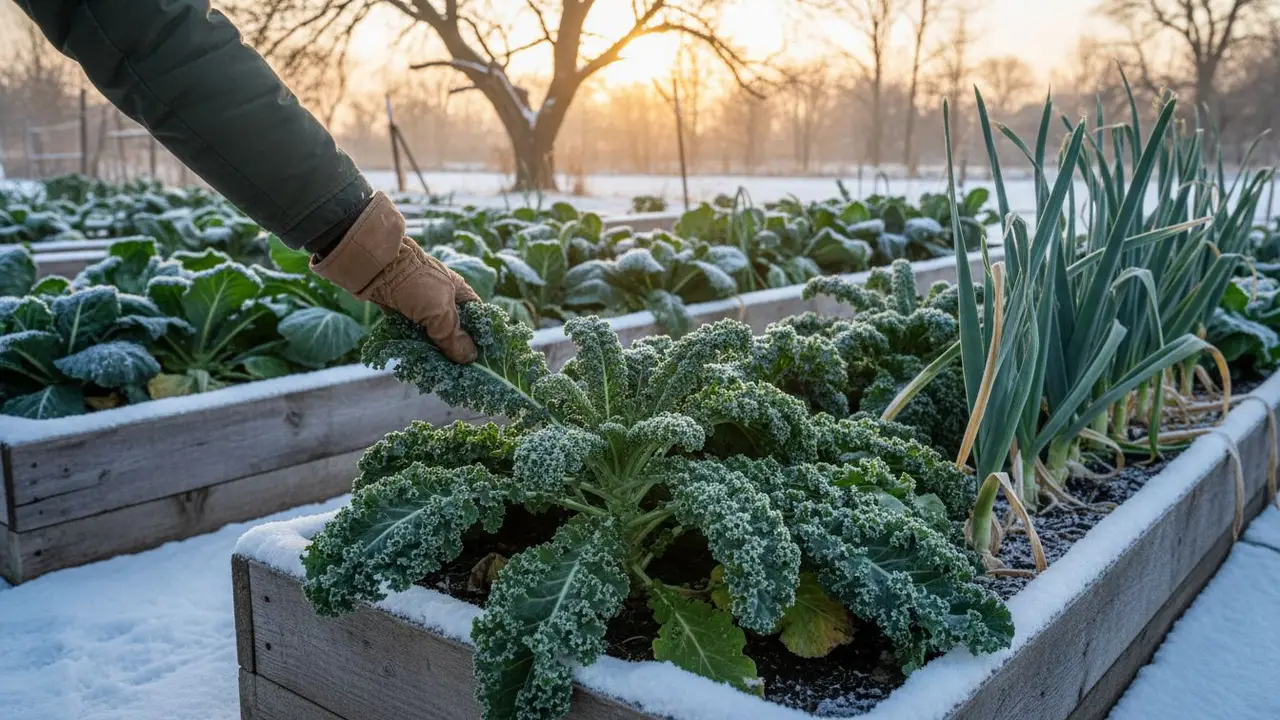
The first time I brushed snow off a cold frame and cut a bowl of crisp spinach in January, I felt like I had gotten away with something. Most people assume the garden shuts down with the first frost, but growing vegetables in winter is one of the most rewarding skills a cold-climate gardener can learn. Fresh spinach, kale, carrots, and salad greens straight from your own beds in the dead of winter are entirely possible, even where the ground freezes solid. The trick is that winter gardening is not really about growing at all. It is about protecting and harvesting hardy crops you planted months earlier, treating your garden as a living, self-refrigerating pantry. Once that idea clicks, the whole thing becomes surprisingly simple.
In this guide I will explain the big mental shift that makes winter gardening work, the fall timing that is truly make-or-break, which crops to grow, how to protect them, and how to harvest through the cold.
The Big Idea: Winter Gardening Is Storage, Not Growth
Here is the single concept that changes everything, and the one most beginners miss. In the depths of winter, plants barely grow. As the days shorten and daylight drops below about ten hours, photosynthesis slows to a crawl and plant growth all but stops, regardless of how mild you keep them. The organic grower Eliot Coleman named this stretch the "Persephone period," the weeks around midwinter when days fall under ten hours and the garden goes dormant. The farther north you are, the longer it lasts.
This means your winter garden is not a place where crops are actively bulking up in December. It is a place where nearly full-grown, cold-hardy crops sit in a kind of suspended animation, staying alive and fresh until you harvest them. You are not growing a winter salad so much as keeping the one you grew in autumn crisp and ready in the ground. Reframing winter gardening as cold storage of living plants, rather than growth, is the key that unlocks it, and it explains why timing matters far more than warmth.
Timing: The Fall Planting Window Is Everything
Because growth stalls once winter sets in, your crops must reach nearly full size before the short, cold days arrive. That means the real work of a winter garden happens in late summer and early fall, not in winter. Miss the planting window and you will have tiny seedlings that simply sit, frozen and stunted, until spring.
I learned this the disappointing way my first winter, when I sowed a bed of spinach in November expecting it to grow under a tunnel. It sat there, barely changed, for three months. The next year I sowed that same bed in early September, and by the time the cold arrived it was lush and full-sized. I harvested from it all winter. Same crop, same tunnel, about ninety days' difference in the sowing date, and the results could not have been more different. Timing, not warmth, is what makes a winter garden.
The method is to count backward. Find your first fall frost date and, roughly, when your daylight drops under ten hours, then sow your winter crops early enough that they mature in the still-warm, shortening days of autumn. In practice that usually means sowing hardy greens and roots from mid to late summer. This is where winter gardening leans on the same skill as succession planting: getting the right crop in the ground at the right time. Starting some crops as indoor transplants gives them a head start, and folding these sowings into your fall garden preparation keeps it all on schedule.
Choosing Cold-Hardy Crops
Winter gardening lives and dies by crop choice, because only genuinely cold-hardy plants survive the freeze. Michigan State University Extension has good lists of cold-hardy vegetables for fall and winter harvest, and they sort roughly into tiers.
- The toughest, which shrug off hard freezes with little or no cover, include spinach, kale, mache, collards, leeks, and parsnips. Garlic is planted in fall to overwinter dormant and is harvested the following summer.
- Root crops stored right in the ground, like carrots, beets, and parsnips, hold beautifully under a deep mulch and can be dug through winter as needed.
- Semi-hardy crops such as lettuce, arugula, chard, radishes, and Asian greens come through winter well with the shelter of a cold frame or tunnel.
There is a delicious bonus to all this cold. Many hardy crops respond to freezing by converting their starches into sugars, a natural antifreeze, so carrots, kale, and cabbage actually taste sweeter after a hard frost than they ever do in summer. Frost-kissed winter carrots are, to my palate, the best carrots of the entire year.
Winter Gardening in Any Climate
How much you can grow, and how much protection it takes, depends on where you garden, so set your expectations to your climate. In mild-winter regions, where hard freezes are brief, many hardy greens and roots come through the season in the open or under nothing more than a row cover, and the winter garden is nearly as easy as the summer one. In cold-winter regions, which covers much of the northern United States, the same crops thrive but need real shelter: a cold frame or tunnel becomes the difference between a harvest and a loss. In the very coldest areas, focus on the toughest crops of all, spinach, kale, mache, and leeks, plus root crops stored in-ground under deep mulch, and double up your covers. The colder your winters, the more you lean on protection and in-ground storage rather than standing greens, but there is almost nowhere that a determined gardener cannot pull something fresh from the ground in winter.
Protecting the Winter Garden
With the right crops in the ground at the right time, protection is what carries them through, and it is simply a matter of layering the season-extension tools. A heavy blanket of mulch insulates root crops so you can dig them from unfrozen soil. A floating row cover adds a few degrees over the hardiest greens. A cold frame makes a warm box for a steady supply of winter salad, and low tunnels and hoop houses scale that protection across whole beds. For the deepest cold, layer them: a row cover draped over plants inside a tunnel or frame buys a remarkable amount of hardiness. Think of each covered bed as an outdoor refrigerator you harvest from live.
How to Harvest in Winter
Harvesting in the cold has its own small rhythm, and once you know it, it is easy.
- Let frozen leaves thaw first. Leaves that are frozen stiff at dawn are brittle and bruise if you handle them, so harvest on milder afternoons once they have softened. On a sunny day, midday is ideal.
- Do not panic at wilted greens. The first time I found my cold-frame lettuce collapsed and glassy on a hard-frozen morning, I was certain I had lost the whole bed, only to watch it stand back up, perfectly fine, by early afternoon as it thawed. Winter greens do this droop-and-recover almost daily, and it is completely normal, not a sign of death.
- Harvest lightly. Because plants barely regrow in winter, treat each one as stored food. Take a few outer leaves at a time rather than cutting a plant to the ground, and it will keep supplying you for weeks.
- Water rarely. Cold soil, low evaporation, and covers that hold moisture mean your winter garden needs little to no watering. Check occasionally, and if the soil under a cold frame or tunnel has genuinely dried out, water lightly on a mild morning so the plants are not sitting wet through a freezing night.
A Winter-Garden Mindset
Growing vegetables in winter completes the year-round garden. It dovetails with keeping the harvest: the tender crops that cannot take the cold get stored, frozen, or preserved in fall, while the hardy ones stay out in the garden as living food, and between the two you eat from your own land in every month. This is the beating heart of self-reliant winter homesteading, and it all rests on the same healthy, well-built no-dig soil that carries the rest of your garden.
My honest advice is to start small and let one success pull you in. This year, sow a bed of spinach in late summer, tuck a thick mulch over a row of carrots, and set a cold frame over some winter lettuce. When you are cutting fresh greens while the neighbors' gardens lie buried and bare, you will understand why so many gardeners say winter is their favorite season to grow. For more on stretching the garden through every season, our gardening library has a guide for each step.
Sources
- Michigan State University Extension — Cold hardy vegetables for fall and winter harvest
- Michigan State University Extension — Gardening through the winter months
- Utah State University Extension — Winter Gardening
- Oregon State University Extension — Growing vegetables in winter
About the Author
Lucas is a writer and researcher focused on sustainable agriculture and permaculture practices.