
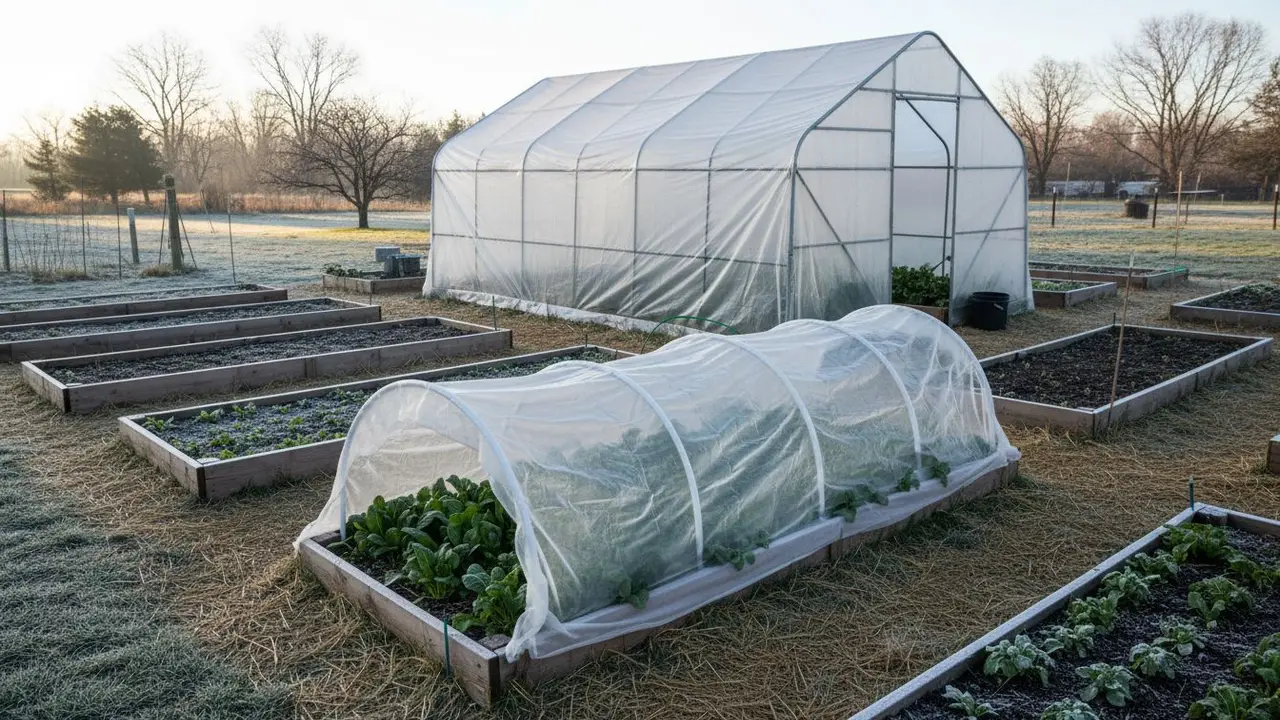
A cold frame is a wonderful way to dip a toe into season extension, but sooner or later most gardeners want to protect more than a single small box. That is where low tunnels and hoop houses come in. Built on the same simple idea, a clear cover over hoops that traps the sun's warmth, they scale season extension up from one corner of a bed all the way to a walk-in structure you can garden inside through the depths of winter. A low tunnel can be thrown together for the price of a few pizzas; a high tunnel is a bigger commitment that can transform what and when you grow. In this guide I will walk through the whole family of tunnels, how to build a simple low one, what a high tunnel adds, and the management skills that keep any of them productive.
The Family of Tunnels: Low to High
"Tunnel" covers a range of structures that differ mainly in size, and it helps to know the landscape before you build.
- Low tunnels are short hoops, usually a foot or two high, bent over a single bed and covered with clear plastic or row-cover fabric. You tend the crop by uncovering the whole tunnel. They are the cheapest, simplest option, and as Michigan State University Extension notes, low tunnels are a low-cost alternative to high tunnels that still deliver serious protection.
- High tunnels, also called hoop houses, are walk-in structures: tall metal or PVC bows covered in greenhouse plastic, roomy enough to stand up and garden inside. They cost more and are semi-permanent, but the payoff is the largest of any season extender.
One important distinction: a high tunnel is not quite a greenhouse. A greenhouse is typically heated and grows plants on benches in pots. A high tunnel is passively heated by the sun alone, and the plants grow directly in the ground, just as they would outdoors, only warmer and protected. That simplicity is exactly what makes it so accessible.
How Tunnels Work, and What They Do
The physics is identical to a cold frame, just spread over more ground. Sunlight passes through the cover, warms the soil and air, and the cover holds that heat in, creating a microclimate several degrees warmer and far more sheltered than the open garden. That buys you a great deal.
On the cool end, tunnels let you keep harvesting cold-hardy crops like spinach, lettuce, and arugula deep into or through winter, and start the spring garden weeks early. On the warm end, a high tunnel is a revelation for heat-lovers: tomatoes, cucumbers, and strawberries grown under cover come earlier, last later, and are often cleaner and higher quality, because the cover also keeps off the driving rain that spreads many foliar diseases. Tunnels shelter from wind, and a fabric cover adds pest exclusion, the same benefit I cover in my guide to row covers. Penn State Extension's resources on high tunnel production go deep on just how much these structures can extend a growing season.
Building a Simple Low Tunnel
The low tunnel is the perfect first project, and it is genuinely cheap. My first one cost about twenty-five dollars and gave me fresh salad in December. Here is the recipe.
- Make the hoops. Bend lengths of half-inch PVC pipe, #9 wire, or metal electrical conduit into arches and push the ends firmly into the soil, or slide them over short rebar stakes, spacing them every three to four feet along the bed.
- Add the cover. Drape the hoops with 6-mil greenhouse plastic if you want maximum warmth, or with floating row-cover fabric if you mainly want frost and pest protection with less overheating risk.
- Seal the edges. Anchor the cover the same way you would a row cover: bury the edges, weight them with sandbags or boards, or use clips. Gaps let the warmth leak out.
A low tunnel sits beautifully over a raised bed, which gives it tidy edges to anchor to and well-drained soil underneath. The one habit you must build is ventilation, which I will come back to, because a closed plastic low tunnel on a sunny day heats up just as fast and dangerously as a cold frame.
It is worth thinking about the cover material for a moment, because it changes what the tunnel does. Clear greenhouse plastic traps the most heat and is the choice for pushing warmth into the cold months, but it demands vigilant venting and lets in no rain. Floating row-cover fabric breathes, so it forgives a missed venting day and still passes some rain and air, but it holds less heat, making it better for frost and pest protection than for deep-winter warmth. Many gardeners keep both on hand and swap them with the season. Whichever you choose, buy true UV-stabilized greenhouse plastic rather than hardware-store sheeting; it resists sun degradation and will last several seasons instead of shredding after one.
Stepping Up to a High Tunnel
When you are ready to garden standing up all winter and grow premium summer crops, a high tunnel is the next step. It is a walk-in tunnel of metal bows anchored to ground posts, covered in a single layer of greenhouse poly, usually with roll-up sides for ventilation and end walls with doors. Michigan State University Extension has good guidance on how high tunnels extend the growing season, and the payoff is substantial.
Inside a high tunnel you can run an inner low tunnel over the beds for winter greens, layering two covers to gain the equivalent of moving your garden well over a thousand miles south. In the warm months the same structure produces tomatoes and cucumbers that ripen earlier and cleaner than anything outdoors. It is worth knowing, too, that in the United States the USDA Natural Resources Conservation Service has offered cost-share assistance for high tunnels through its conservation programs, which can offset a meaningful part of the investment.
A high tunnel does ask more of you. Site it on level ground with full sun and some wind shelter, and check whether your area requires any permit. Because the cover keeps all rain off the soil, you must provide water, which makes drip irrigation essentially mandatory, something I forgot my first winter until I noticed how bone-dry the beds had gone. And because you grow intensively in the same protected soil year after year, you cannot rotate to a distant bed, so soil care becomes critical: feed generously with compost, keep the ground covered, follow a tight rotation within the tunnel, and watch for the pests and diseases that the warm, still air can encourage.
Managing Any Tunnel Well
Whatever size you build, the same handful of skills keep it productive, and the first one is the most important by far.
- Ventilate, ventilate, ventilate. More tunnel crops are lost to overheating than to cold. On any sunny day, even a cold one, open things up: lift the ends of a low tunnel, or roll up the sides and open the doors of a high tunnel, then close everything before dusk to trap the day's warmth. This is the rhythm of tunnel gardening.
- Irrigate. Tunnels shed rain, so the soil inside depends entirely on you. A drip line is the cleanest way to keep the root zone watered without wetting foliage.
- Layer for cold snaps. Throw a floating row cover directly over the plants inside on the coldest nights for an extra measure of protection.
- Tend the soil. Intensive, protected growing draws heavily on the soil, so build it up with compost, grow in a no-dig system, and keep it mulched. Scout regularly, since aphids and mildews love the sheltered air.
Which Structure Is Right for You?
My advice is to climb the ladder one rung at a time. A row cover is the simplest protection; a cold frame adds a warm box for greens and seedlings; a low tunnel scales that protection across a whole bed for pocket change; and a high tunnel turns season extension into a way of life. You do not need to start at the top. Build a low tunnel over one bed this fall, learn the ventilation rhythm, and let your ambitions grow from there.
Tunnels are also only half of eating from your garden year-round. Growing food later and earlier pairs naturally with keeping the harvest, so what you grow under cover in the shoulder seasons joins what you have stored from summer, the heart of self-reliant winter homesteading. Get the sun, the venting, and the soil right, and a simple arch of pipe and plastic will hand you fresh food in months you never thought possible. For more on growing more in every season, our gardening library has a guide for each step, and Utah State University Extension's high tunnel research is an excellent deeper resource.
Sources
About the Author
Lucas is a writer and researcher focused on sustainable agriculture and permaculture practices.